Weekly Reflections
GOSPEL MEDITATION - ENCOURAGE DEEPER UNDERSTANDING OF SCRIPTURE

WEEKLY READINGS AND OBSERVANCES - ENGAGE PARISHIONERS IN DAILY MASS AND PRAYER
Sunday: Mt 21:1-11 (37)/Ps 22:8-9, 17-18, 19-20, 23-24/Is 50:4-7/Phil 2:6-11/Mt 26:14-27:66 or 27:11-54
Monday: Is 42:1-7/Ps 27:1, 2, 3, 13-14/Jn 12:1-11
Tuesday: Is 49:1-6/Ps 71:1-2, 3-4a, 5ab-6ab, 15 and 17/Jn 13:21- 33, 36-38
Wednesday: Is 50:4-9a/Ps 69:8-10, 21-22, 31 and 33-34/Mt 26:14- 25
Thursday: Ex 12:1-8, 11-14/Ps 116:12-13, 15-16, 17-18/1 Cor 11:23- 26/Jn 13:1-15
Friday: Is 52:13-53:12/Ps 31:2 and 6, 12-13, 15-16, 17 and 25/Heb 4:14-16; 5:7-9/Jn 18:1-\19:42
Saturday: Easter Vigil: Gn 1:1-2:2 or 1:1, 26-31a/
Ps 104:1-2, 5-6, 10, 12, 13-14, 24, 35 (30) or Ps 33:4-5, 6- 7, 12-13, 20-22 (5b)/
Gn 22:1-18 or 22:1-2, 9a, 10-13, 15-18/Ps 16:5, 8, 9-10, 11 (1)/
Ex 14:15-15:1/ Ex 15:1-2, 3-4, 5-6, 17-18 (1b)/Is 54:5-14/
Ps 30:2, 4, 5-6, 11-12, 13 (2a)/Is 55:1-11/Is 12:2-3, 4, 5-6 (3)/
Bar 3:9-15, 32-4:4/Ps 19:8, 9, 10, 11 (Jn 6:68c)/Ez 36:16- 17a, 18-28/
Ps 42:3, 5; 43:3, 4 (42:2)/Rom 6:3-11/Ps 118:1-2, 16-17, 22- 23/Mt 28:1-10
Next Sunday: Acts 10:34a, 37-43/Ps 118:1-2, 16-17, 22-23 (24)/Col 3:1-4 or 1 Cor 5:6b-8/Jn 20:1-9 or Mt 28:1-10 Or Lk 24:13-35
Observances for the week of March 29, 2026
Sunday: Palm Sunday of the Passion of the Lord;
Holy Week begins
Monday: Saint John Climacus
Tuesday:
Wednesday:
Thursday: Holy Thursday, St. Francis of Paola
Friday: Good Friday
Saturday: Holy Saturday
Saint Isidore, Bishop and Doctor of the Church
Next Sunday: Easter Sunday
Observances for the week of March 22, 2026
Sunday: 5th Sunday of Lent, St. Nicholas of Flue
Monday: St. Turibius of Mogrovejo, Bishop
Tuesday: St. Catherine of Sweden
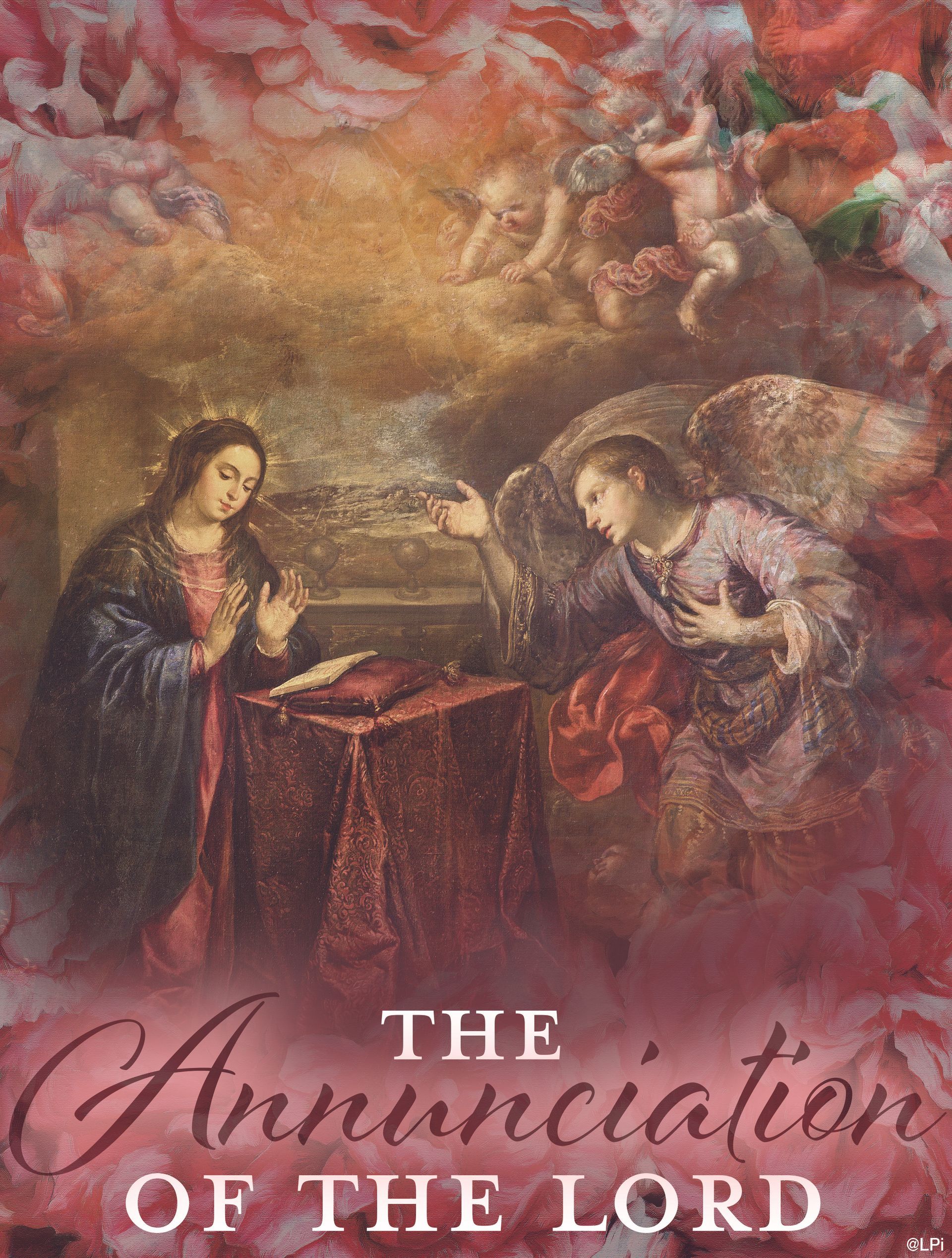
Wednesday: The Annunciation of the Lord
Thursday: St. Ludger
Friday: St. Rupert of Salzburg
Saturday: St. Venturino of Bergamo
Next Sunday: Palm Sunday of the Passion of the Lord; Holy Week begins
March 22, 2026
5th Sunday of Lent
John 11:1-45
A friend of mine wrote an imaginative reflection on the raising of Lazarus that caught me off guard. She proposed that when Jesus called Lazarus from the tomb, the man was not joyful but angry and annoyed. After so much suffering, maybe death felt like a release. He had finally escaped the pain. And then, suddenly, Jesus’ voice cuts through the silence: “Lazarus, come out!” (John 11:43) The light stings his eyes. The pain returns. And now he is dragged back into a world that had broken him.
It startled me at first, but the more I sat with it, the more it made sense. Sometimes, people do not want to be raised. Not at first. Think of those in the grip of addiction, despair, or numbness. The tomb can feel safer than the risk of living again. Yet Jesus, moved by the grief and faith of others (Martha, Mary, the community) calls the dead man out. Lazarus obeys. But he is still bound, head to foot. Jesus says to the bystanders, “Untie him and let him go” (John 11:44).
That is often how healing happens: slowly, reluctantly. Not just by a personal decision, but through the love and persistence of others. Resurrection is not always euphoric. It may begin in protest and confusion and only later turn to gratitude and freedom. But Christ’s voice breaks through, anyway.
Lenten challenge:
Who in your life needs to be called back to life? Pray for them. If that person is you, listen for the voice. It is calling even now.
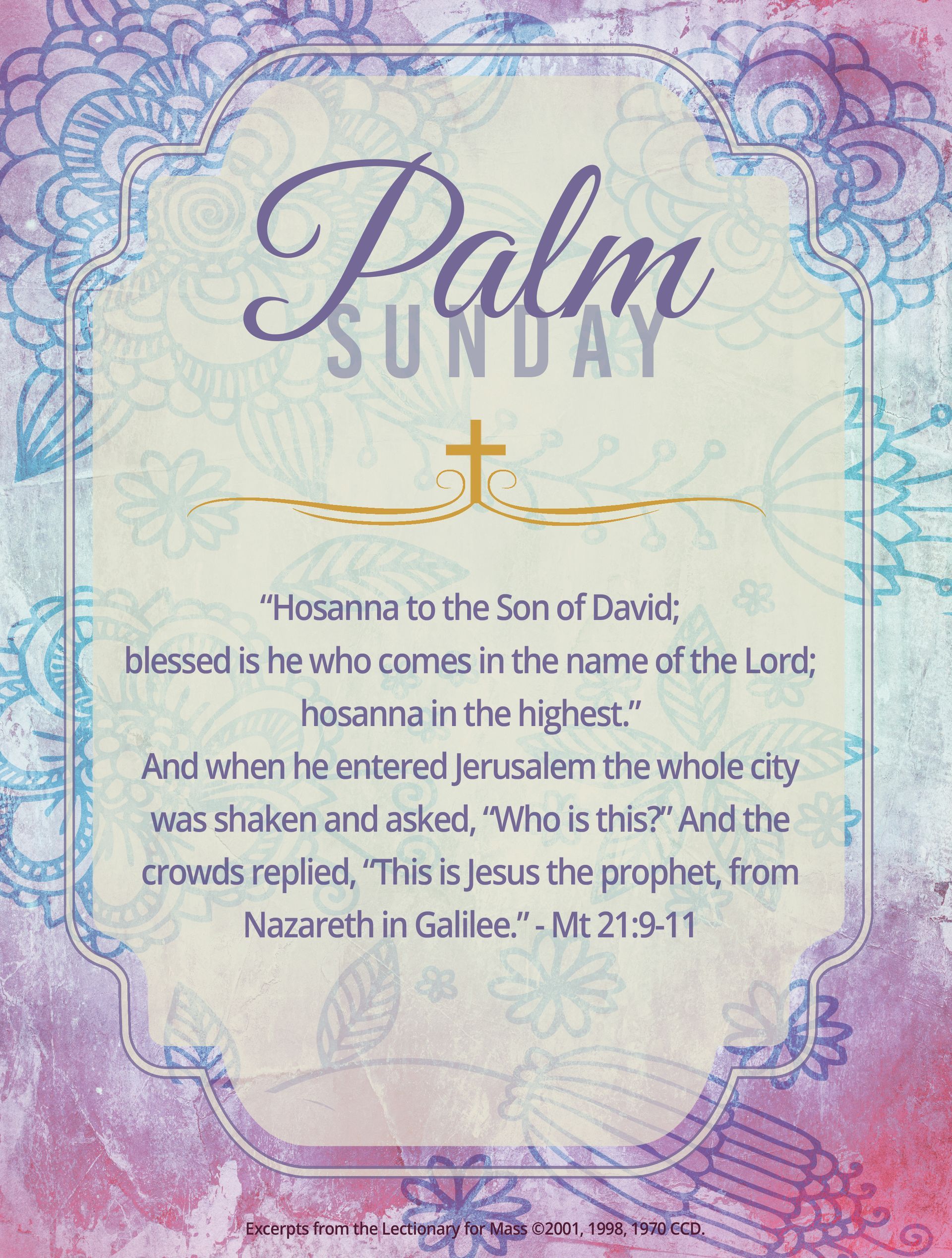
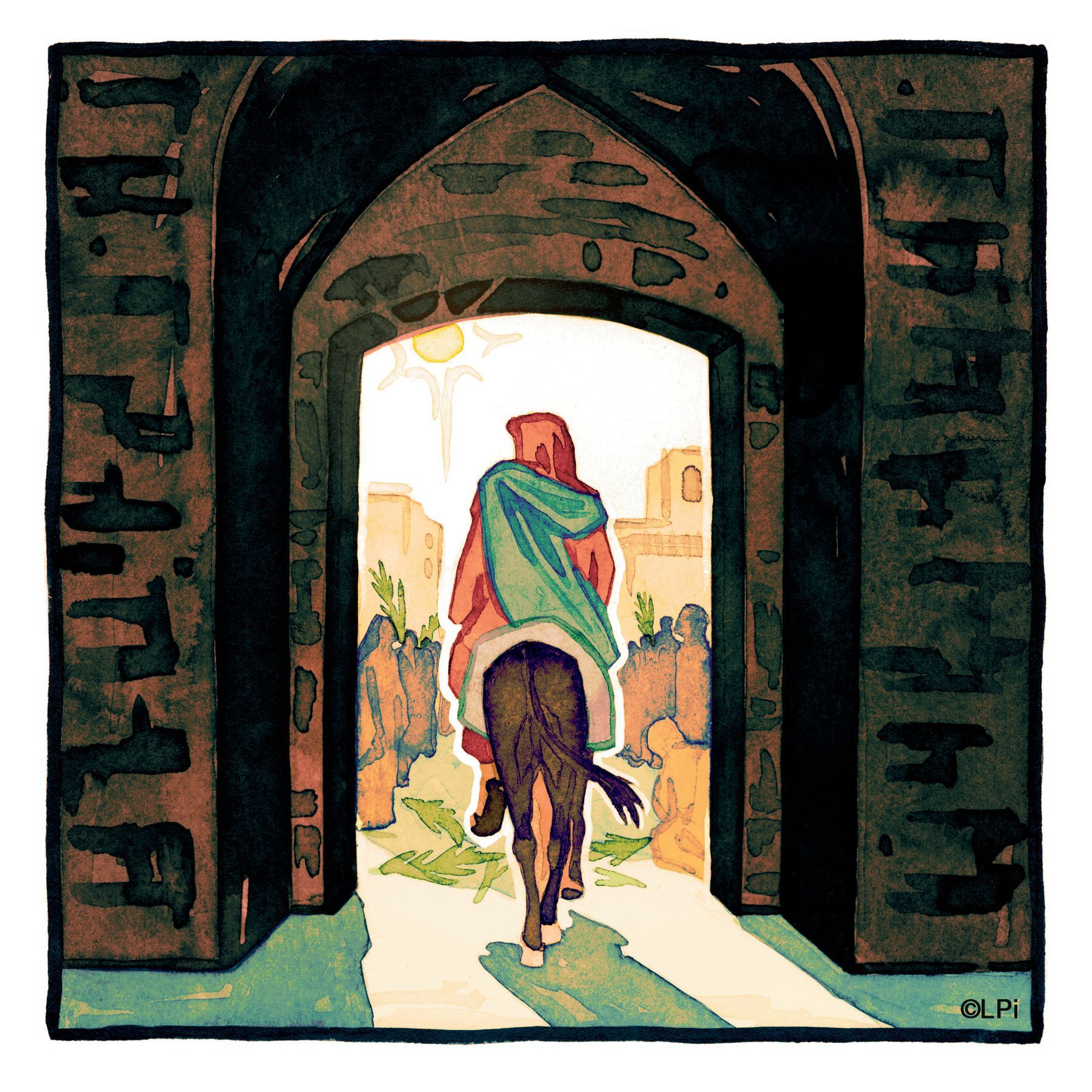
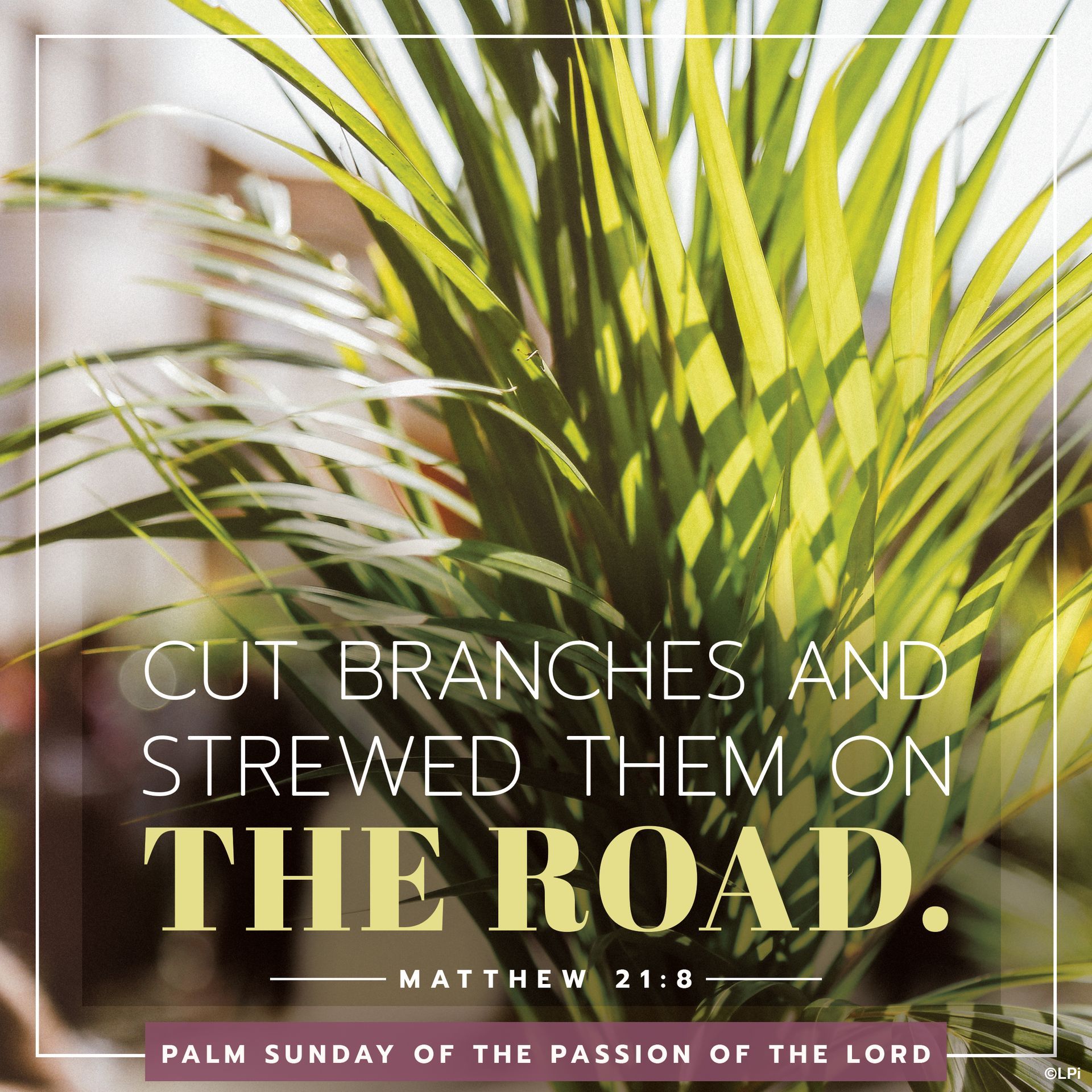
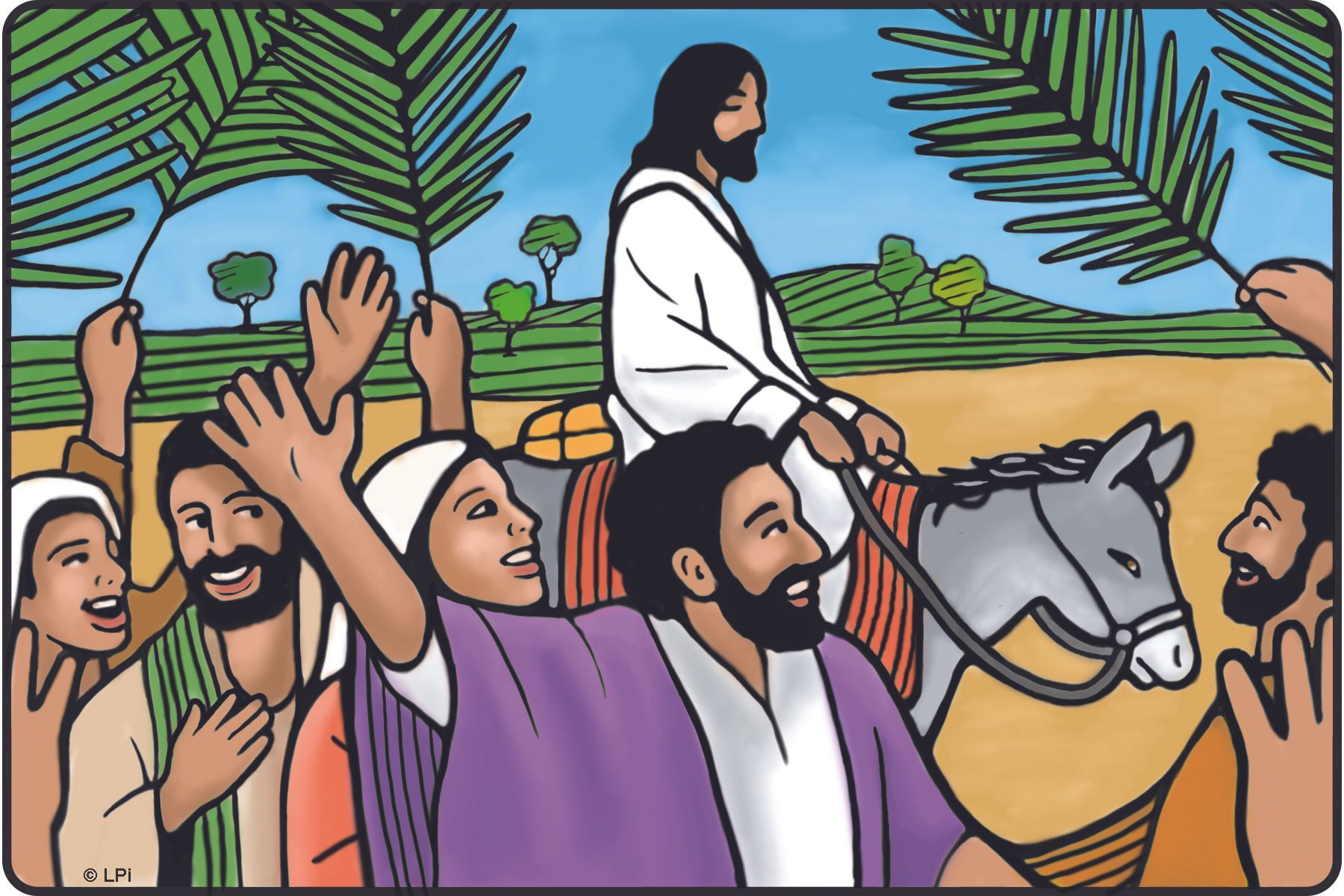
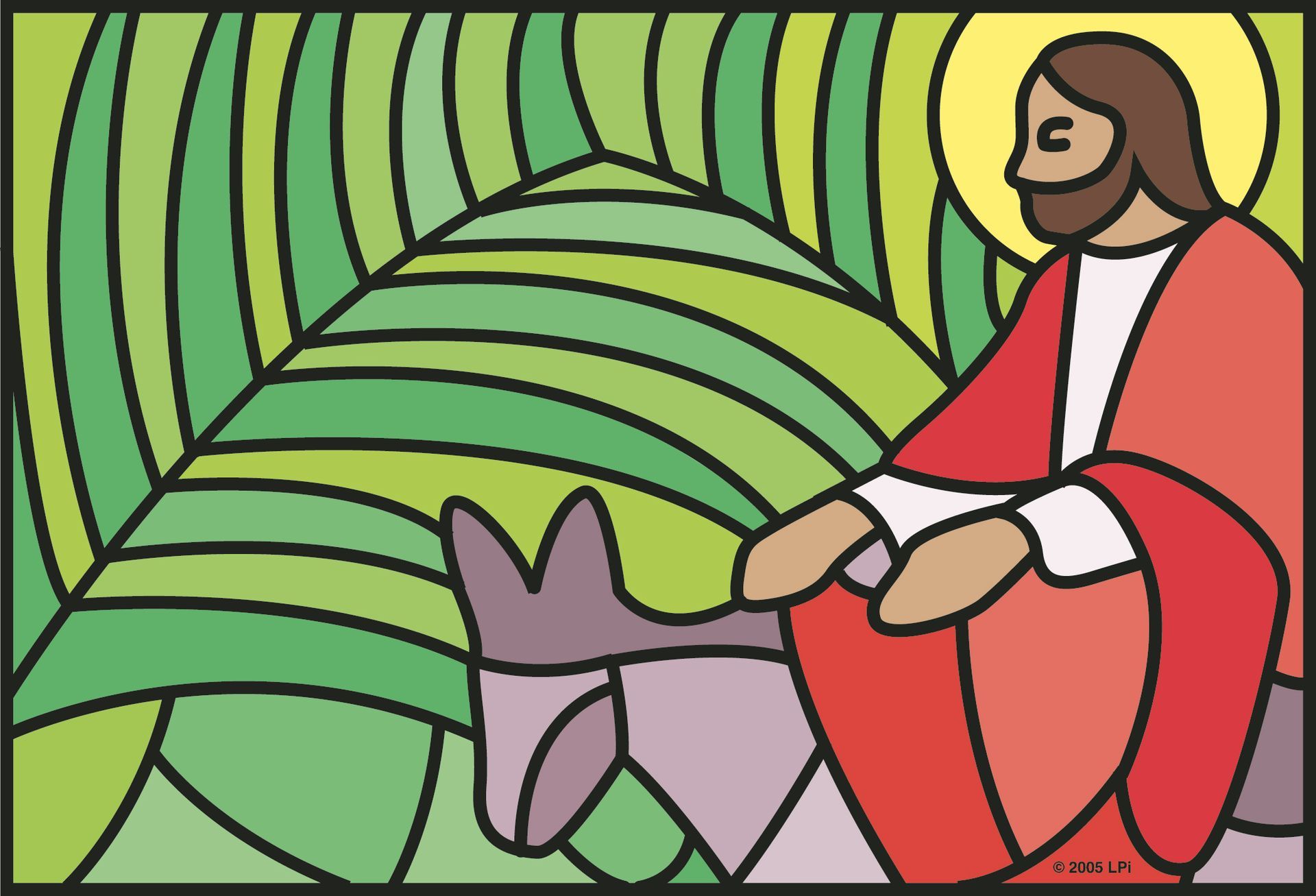
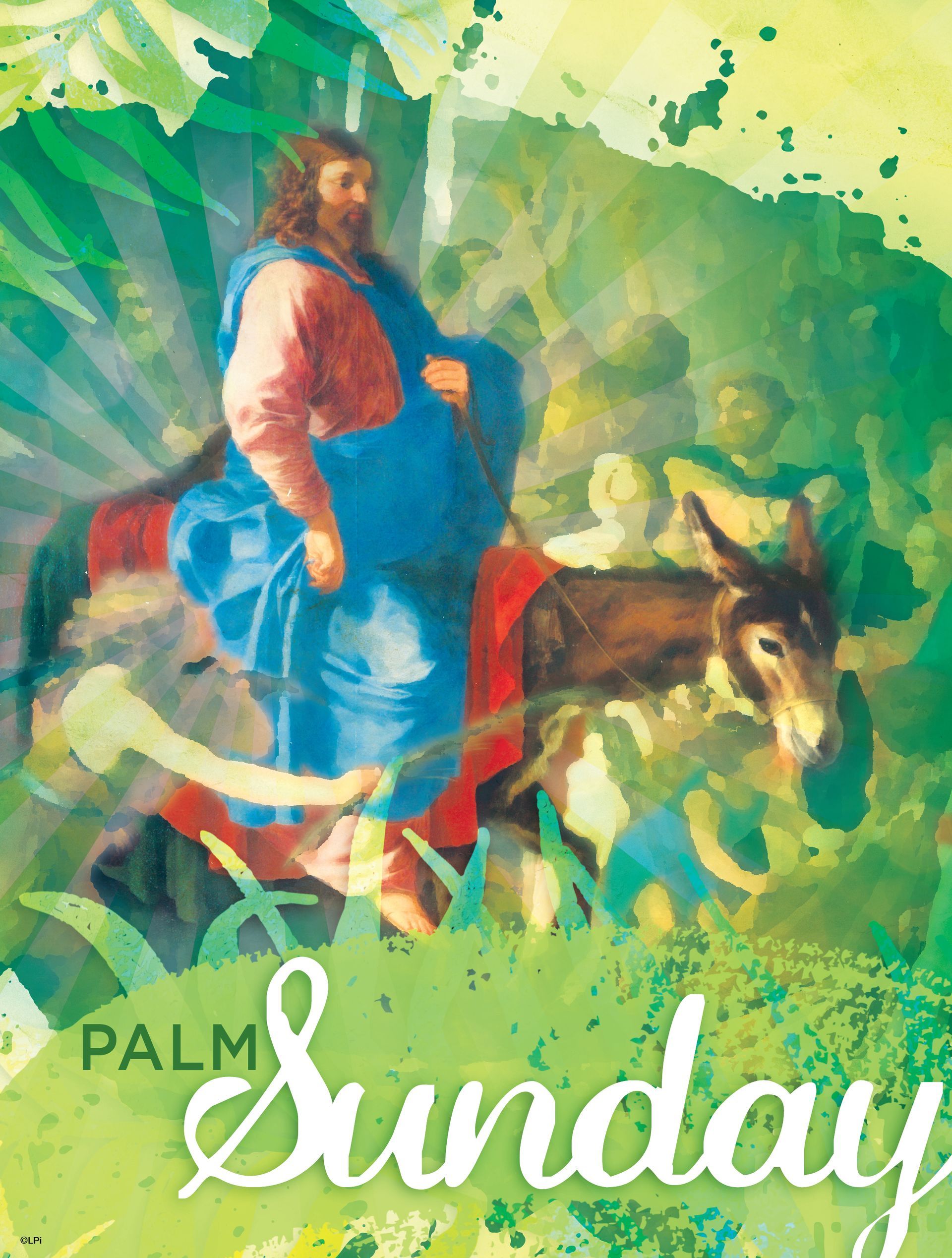
Palm Sunday of the Passion of the Lord / March 29, 2026
SUNDAY'S READINGS
First Reading:
I gave my back to those who beat me, my cheeks to those who plucked my beard; my face I did not shield from buffets and spitting. (Is 50:6)
Psalm:
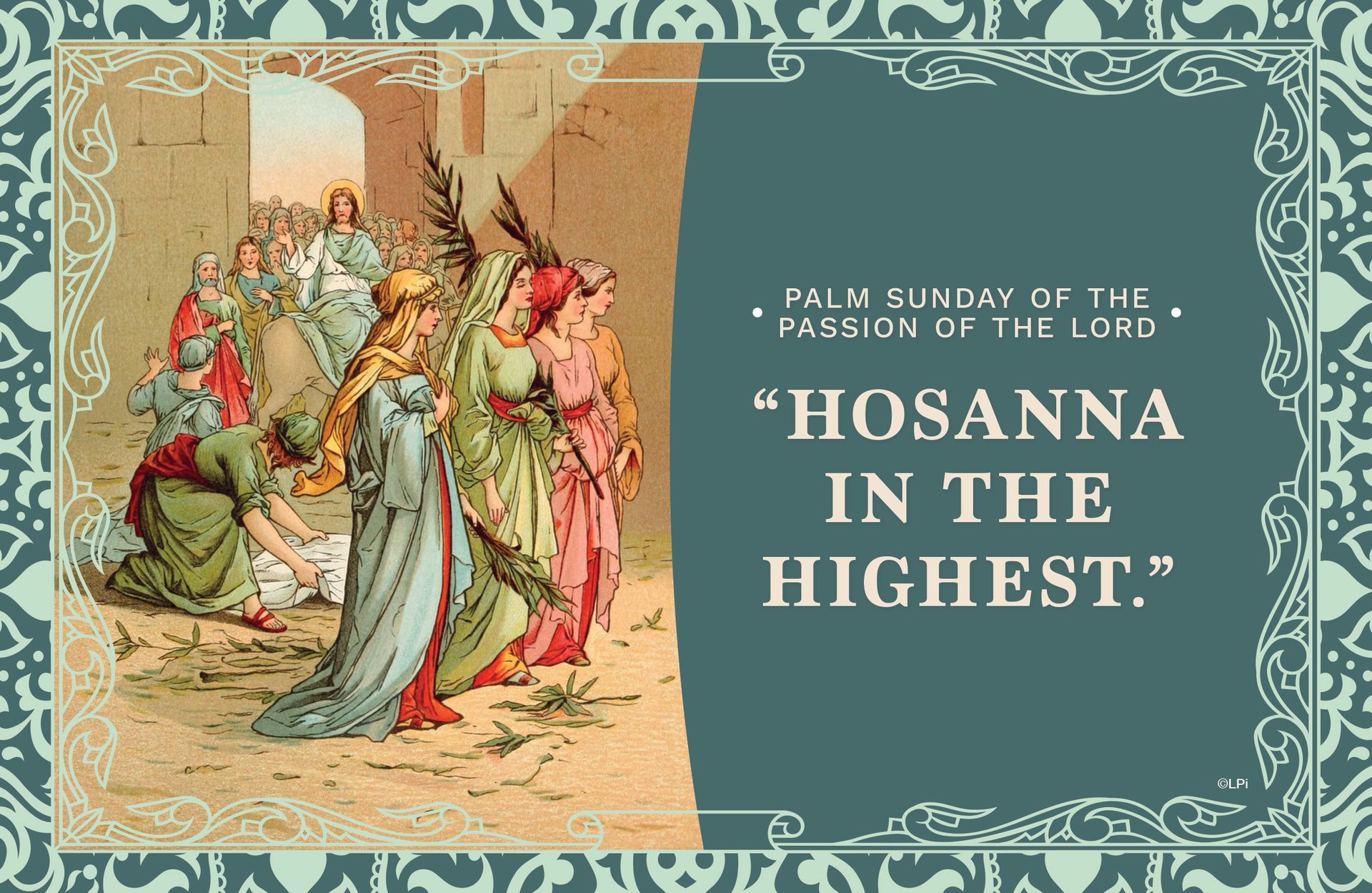
My God, my God, why have you abandoned me? (Ps 22)
Second Reading:
He humbled himself, becoming obedient to the point of death,
even death on a cross. Because of this, God greatly exalted him. (Phil 2:8-9)
Gospel:
The centurion and the men with him who were keeping watch over Jesus feared greatly when they saw the earthquake and all that was happening, and they said,
"Truly, this was the Son of God!"
(Mt 26:54)
QUESTIONS OF THE WEEK - INVITE PARISHIONERS TO REFLECT AND RESPOND TO SCRIPTURE
1st Reading Question
Isaiah speaks of his obedient response to God’s call despite his suffering. Have you ever suffered for your faith?
2nd Reading Question
Paul recounts how Jesus’ life was characterized by humility and obedience. In what ways do you live by these virtues?
Gospel Question
There are numerous unique features to Matthew’s account of the passion of the Lord, including the details of Judas’ suicide. What parts of the passion narrative do you find most engaging?
LIVE THE LITURGY - INSPIRATION FOR THE WEEK
This week, we see things that break our heart — God betrayed. This week, we see things that shake our faith — God bleeding on a cross. This week, this Holy Week, with all its difficult moments, can change us, if we let it. Are we ready?
(PRACTICING) CATHOLIC - RECOGNIZE GOD IN YOUR ORDINARY MOMENTS
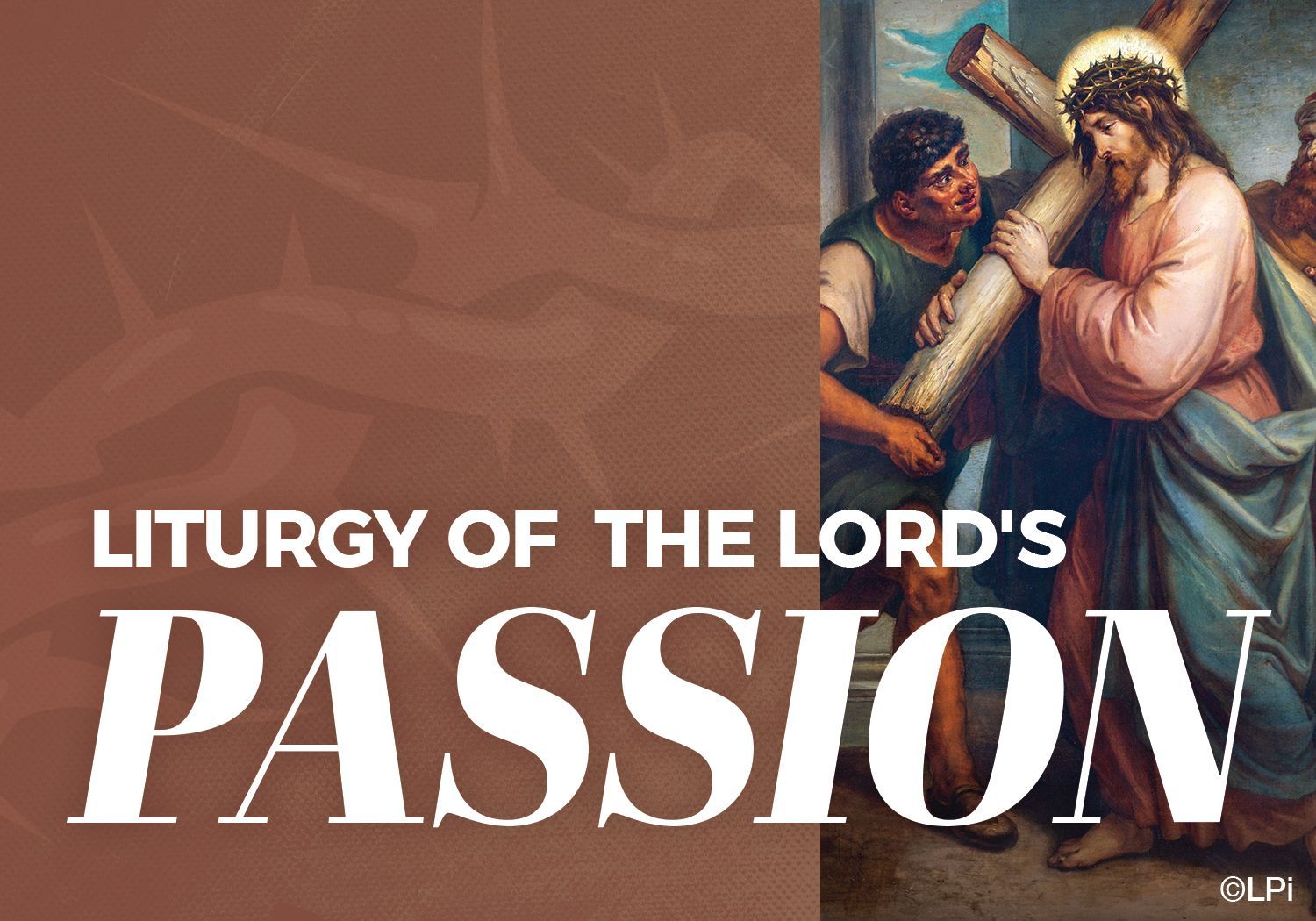
Mini reflection: The chasm between man and his Creator is an ancient one, and it is driven deep and wide. But this week — this Holy Week — a bridge is built across the chasm. And God reaches out His hand.
Every “What shall I do with Jesus?”
These cries echo forth from the depths of this chasm.
But this week — this Holy Week — a bridge is built across the chasm. And God reaches out His hand.
EVERYDAY STEWARDSHIP - RECOGNIZE GOD IN YOUR ORDINARY MOMENTS
Everyday Stewardship
As a Catholic, I am very grateful for the wonderful expression of the Mass. When united in this liturgical experience, we are not only present to the reality of the bread and wine becoming the real presence of Jesus, but are also connected spiritually to the institution of the Holy Eucharist at the Last Supper and to the future heavenly banquet at the end of time. During the Eucharistic Prayer, this is a time to be truly as mindful as we can to what is happening in our midst. Our effort to completely surrender ourselves to the moment is a true act of stewardship.
When we hear the Gospel reading of the passion and death of Jesus at Mass, we are also being called to give of ourselves completely to the moment and to be truly caught up in the story. We should strive to be there at the events of over two thousand years ago, but also to what the reality of those events mean for us today. To do this effectively, we need to spend more time reflecting on the dynamics of the events of Jesus' passion. Hopefully, our Lent has been fruitful and we have spent time with devotions like the Stations of the Cross. Maybe we have taken time to read Scripture slowly and deliberately, taking time to let each aspect sink into our mind and spirit. If Lent has been instead a time of too much business and not much prayer and reflection, the good news is that it is never too late.
During this Holy Week, take some time to enter into the story of the Passion. Good stewardship calls us to not only give of that which can be seen, but also that which cannot be seen. Surrender your mind, body, and spirit to Jesus. He carries his cross before you and beckons you to follow him.
GIVE ONLINE TO ST. ELIZABETH OF THE TRINITY PARISH
As we move closer to our Parish merge we will be moving our online giving to Our Sunday Visitor (OSV). Those who are currently using online giving are asked to log on to OSV to sign up and cancel their current online giving through Parishsoft Ministry Brands (formerly WePay).
We will be sending more information and links through Flocknote or you can use the links or QR Codes below.
This service provided by OSV is easy. It gives you online access and manageability to give to weekly, monthly, special collections, Holy Days and more. Your offering will be withdrawn electronically on the date you specify from the bank account that you designate and OSV will send you a confirming e-mail. Its free, easy and secure!
If you are not yet using online giving you are encouraged to sign up!
To sign up - please use the QR code below or use the blue button Below
God Bless You!
To cancel your online giving through Parishsoft Ministry Brands, please use the button or QR code below.

After you cancel your current online giving, please sign up for online giving through OSV using the button or QR code below



Why Do We Do That?
Catholic Life Explained.
Chastisement vs. Punishment
Question:
What is the difference between a chastisement and a punishment?
Answer:
The distinction between chastisement and punishment is, in many ways, a subtle one, but which is still relevant in our Catholic tradition.
First, chastisement is a concept that is grounded in Sacred Scripture. Here, we see chastisement as a response by God to people’s actions that is intended to teach a lesson. As St. John Paul II observed, “chastisement appears to be … a kind of divine pedagogy, in which the last word is reserved to mercy: He scourges and then shows mercy, casts down to the depths of the nether world, and he brings up from the great abyss” (Tobit 13:2). The idea here is that in order to capture our attention or to highlight how we have not lived out our covenant-relationship with God as we should, there are times when God uses events in life to draw us back to the quality of relationship or faith that we should have.
The concept of punishment, however, has a different sense. The Catechism of the Church observes that punishment is the consequence of a damaging action that “has the primary aim of redressing the disorder” and to protect the community and the common good from further damage or harm (see no. 2266). Although we always hope that someone who is being punished for a crime or some other harmful action will learn from their actions, punishment isn’t necessarily intended to teach a lesson in the same way that a chastisement is.
Ultimately, how we make the distinction between chastisement and punishment is a matter of discernment. As with almost everything in life, our experiences can be an opportunity for grace — or for something less — depending on how open we are to recognizing the movement of God’s Spirit within them.

Blessing for Holy Week
Be with us this week, Lord,
journeying closer and closer to Your pierced and Sacred Heart.
Immerse us in Your intense and undying love.
Help us to encounter Your passion in new ways that inform, surprise, and inspire us.
Amen.
Blessing for New Life
God, in Your goodness, restore our hope. Where we feel imprisoned, break our chains.
Where we feel discouraged, bring us light. Where the ground feels dry, break through with life anew.
Amen.
Blessing to See
Bless us, Lord, to see as You see.
Remind us that heartbeats and hopes can outshine outward show.
That quiet witness can overcome violence and darkness.
That Your Light can break like the dawn.
Amen.
Blessing of Living Water
Lord, where there has been dryness in my life, bless me with Your living water!
Where I fear to dream of new hope and growth, bless me with Your living water!
Where I’m thirsty for new and abundant life, bless me with Your living water!
Drench the parched earth with Your promise, bless me with Your living water!
Amen.
Blessing of Hope
In Your goodness Lord, bless us.
Help us to know Your abundance and Your gifts.
Help us to hear Your voice and know Your assurance.
Help us remember what You have done,
and look forward to what You will do.
Amen.
Lenten Blessing
Bless us in Your mercy, Lord, as we enter these 40 Days of Lent.
Use this time to call, anoint, bind, strengthen, and inspire us anew.
Like a good shepherd, teach us Your voice, and give us the strength to follow.
Amen.
Blessing of Love
Heavenly Father, Ignite us with Your love. Reveal to us Your will, guide us in Your path.
Pour Your blessings upon us, You who are the giver of every good thing.
Help us to live, work, act, and speak in ways that bring honor and glory to You.
Amen.
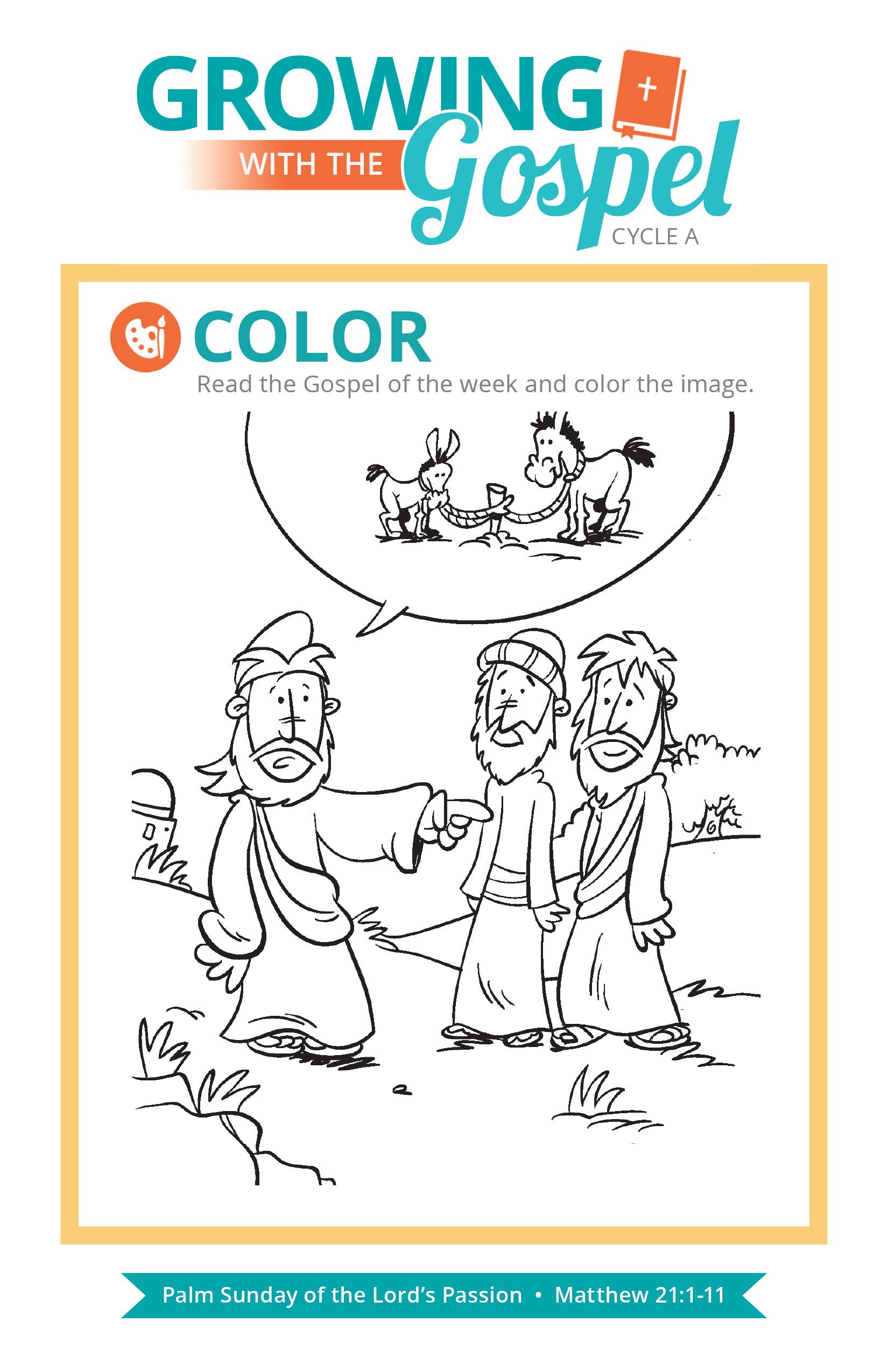
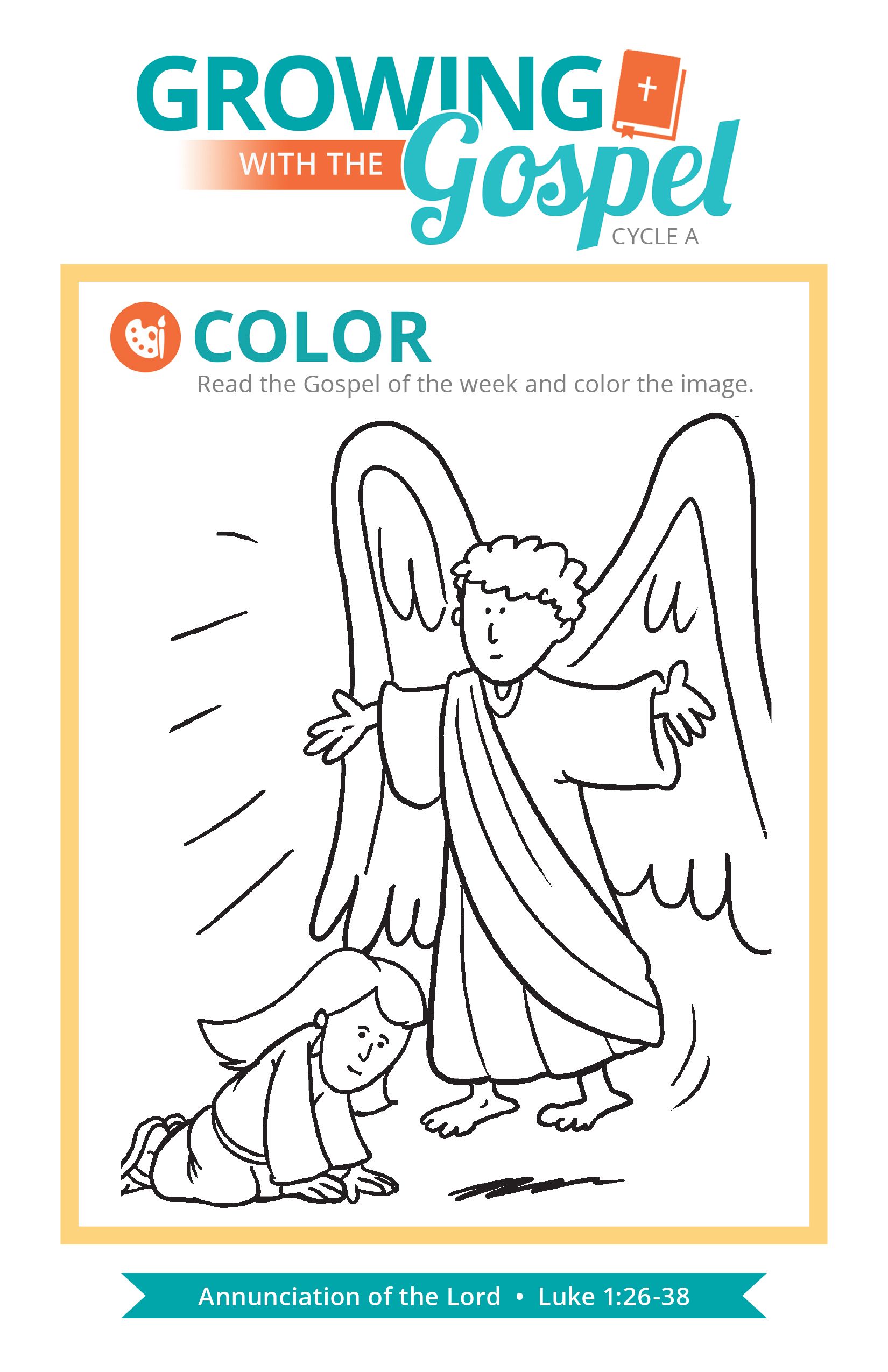
Growing the Gospel For Our Children
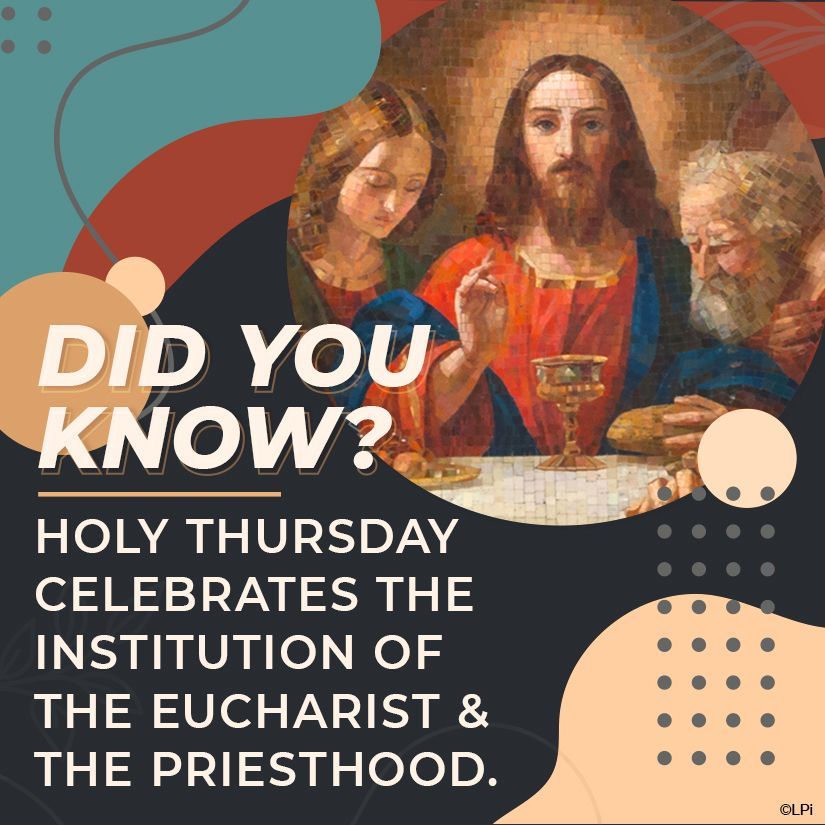
Tap the button below the poster to print the games and puzzle's
(each game uses 2 sheets of paper)
CATHOLIC TRIVIA – JUST FOR FUN
(Click the down arrow for the answer!)
Question: In addition to St. Sebastian, who is the patron saint of police officers?
Question: In addition to St. Sebastian, who is the patron saint of police officers?
Answer: St. Michael the Archangel
Question: In the New Testament, how many times does Jesus tell us we need to forgive our enemies?
Question: In the New Testament, how many times does Jesus tell us we need to forgive our enemies?
Answer: Seventy times seven times.
Question: According to Scripture, what split into two parts at the moment of Jesus’ death on the cross?
Question: According to Scripture, what split into two parts at the moment of Jesus’ death on the cross?
Answer: The Temple curtain
Question: Who had a dream about Jesus during his trial and before his crucifixion?
Question: Who had a dream about Jesus during his trial and before his crucifixion?
Answer: The wife of Pontius Pilate
The Stations of the Cross
The Christian loves to follow the Way of the Cross in the Savior's footsteps. The Stations, from the Prætorium to Golgotha and the tomb, trace the passion and death of Christ, who by his holy cross has redeemed the world. To understand the mystery of Redemption and the salvific meaning of suffering, one ought to meditate upon the sufferings of our Lord, which he took upon himself to save us from sin. God is always with those who suffer. His omnipotence is manifested precisely in the fact that he freely accepted suffering. He could have chosen not to do so. He could have chosen to demonstrate his omnipotence even at the moment of the Crucifixion.7
In the name of the Father, and of the Son,
and of the Holy Spirit. Amen.
My Lord and my God,
under the loving eyes of our Mother,
we are making ready to accompany You
along this path of sorrow,
which was the price paid for our redemption.
We wish to suffer all that You suffered,
to offer You our poor, contrite hearts,
because You are innocent, and yet
You are going to die for us,
who are the only really guilty ones.
My mother, Virgin of sorrows,
help us to relive those bitter hours,
which your Son wished to spend on earth,
so that we, who were made from a handful of clay,
may finally live
in the freedom and glory of the children of God.
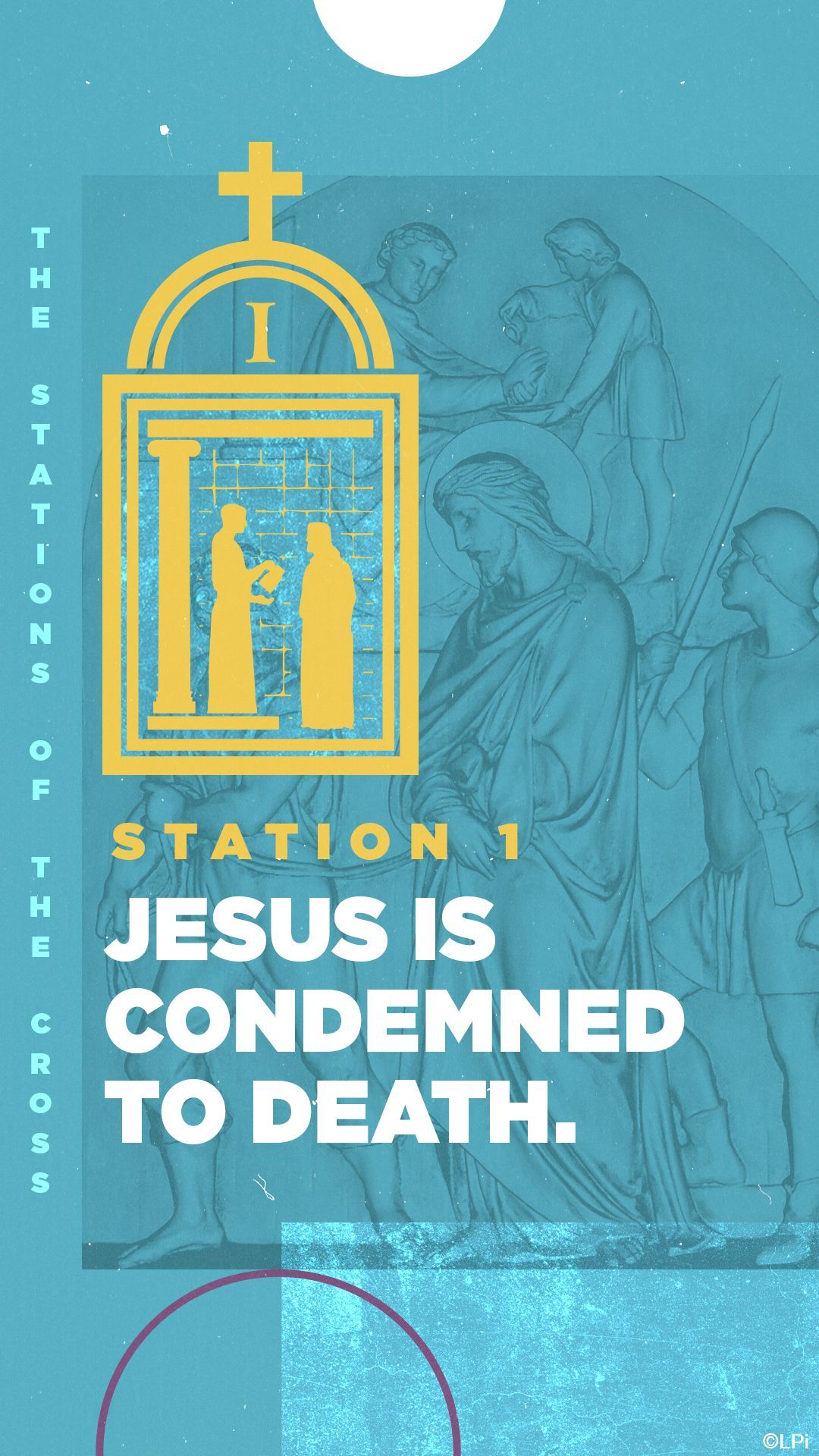
FIRST STATION
JESUS IS CONDEMNED TO DEATH
V. We adore you, O Christ, and we bless you.
R. Because, by your holy cross, you have redeemed the world.
It is after ten in the morning. The trial is moving to its close. There has been no conclusive evidence. The judge knows that his enemies have handed Jesus over to him out of envy, and he tries an absurd move: a choice between Barabbas, a criminal accused of robbery and murder, and Jesus, who says he is Christ. The people choose Barrabas, and Pilate exclaims: What am I to do, then, with Jesus? (Mt 27:22).
They all reply: Crucify him! The judge insists: Why, what evil has he done? Once again they respond, shouting: Crucify him! Crucify him!
Pilate is frightened by the growing uproar. So he sends for water and washes his hands in the sight of the people, saying as he does so: I am innocent of the blood of this just man; it is your affair (Mt 27:24).
And having had Jesus scourged, he hands him over to them to be crucified. Their frenzied and possessed throats fall silent, as if God had already been vanquished.
* Jesus is all alone. Far off now are the days when the words of the Man-God brought light and hope to men's hearts, those long processions of sick people whom he healed, the triumphant acclaim of Jerusalem when the Lord arrived, riding on a gentle donkey. If only men had wanted to give a different outlet for God's love! If only you and I had recognized the day of the Lord!
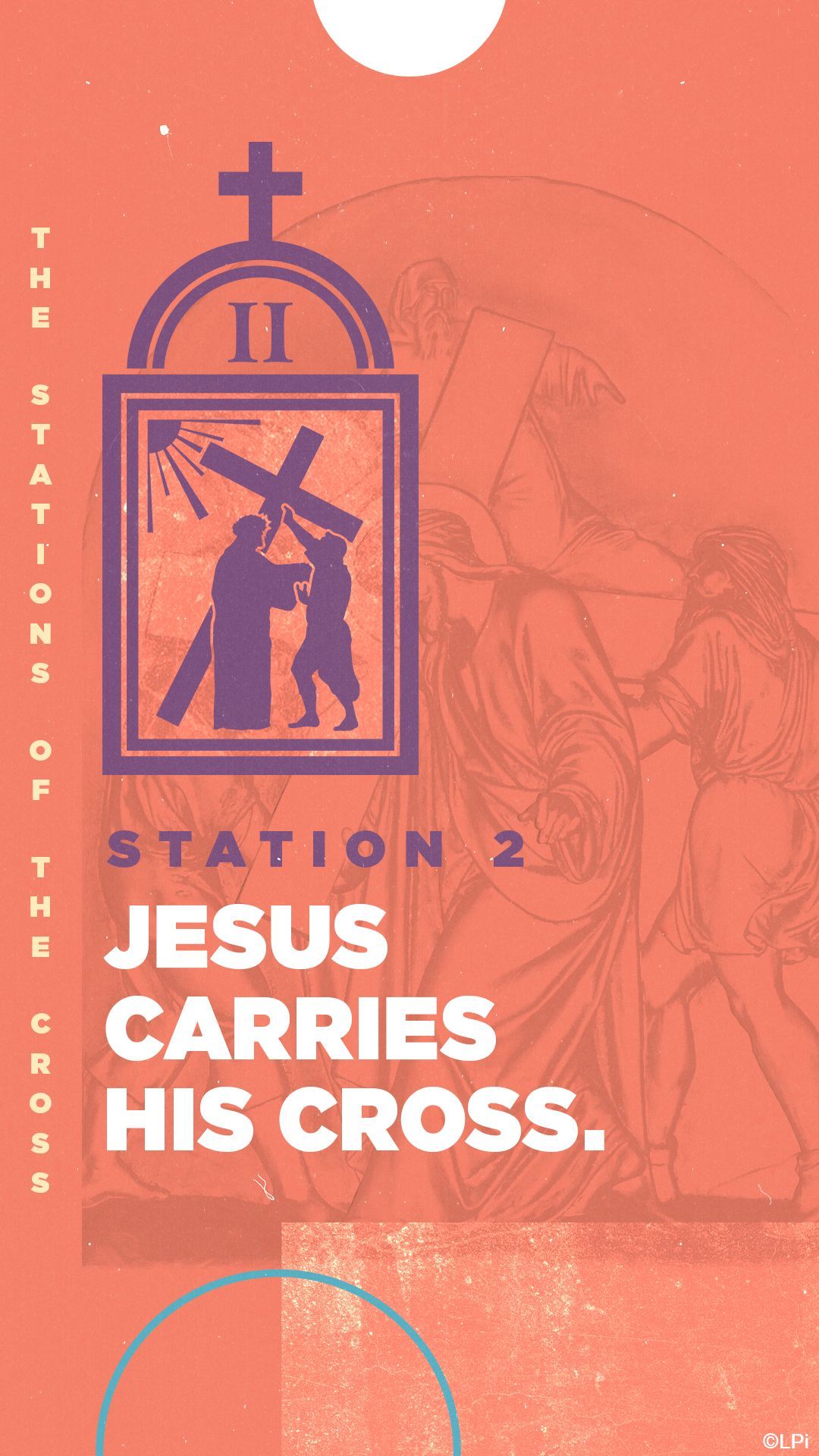
SECOND STATION
JESUS TAKES UP HIS CROSS
V. We adore you, O Christ, and we bless you.
R. Because, by your holy cross, you have redeemed the world.
Outside the city, to the northwest of Jerusalem, there is a little hill: Golgotha is its name in Aramaic; locus Calvariæ, in Latin: the place of skulls, or Calvary.
Offering no resistance, Jesus gives himself up to the execution of the sentence. He is to be spared nothing, and upon his shoulders falls the weight of the ignominious cross. But, through love, the cross is to become the throne from which he reigns.
The people of Jerusalem and those from abroad who have come for the Passover push their way through the city streets, to catch a passing glimpse of Jesus of Nazareth, the King of the Jews. There is a tumult of voices, and, now and then, short silences-perhaps when Jesus fixes his eyes on someone:
If anyone wishes to come after me, let him take up his cross daily and follow me (Mt 16:24).
How lovingly Jesus embraces the wood which is to bring him to death!
* Is it not true that as soon as you cease to be afraid of the cross, of what people call the cross, when you set your will to accept the will of God, then you find happiness, and all your worries, all your sufferings, physical or moral, pass away?
Truly the cross of Jesus is gentle and lovable. There, sorrows cease to count; there is only the joy of knowing that we are co-redeemers with him.
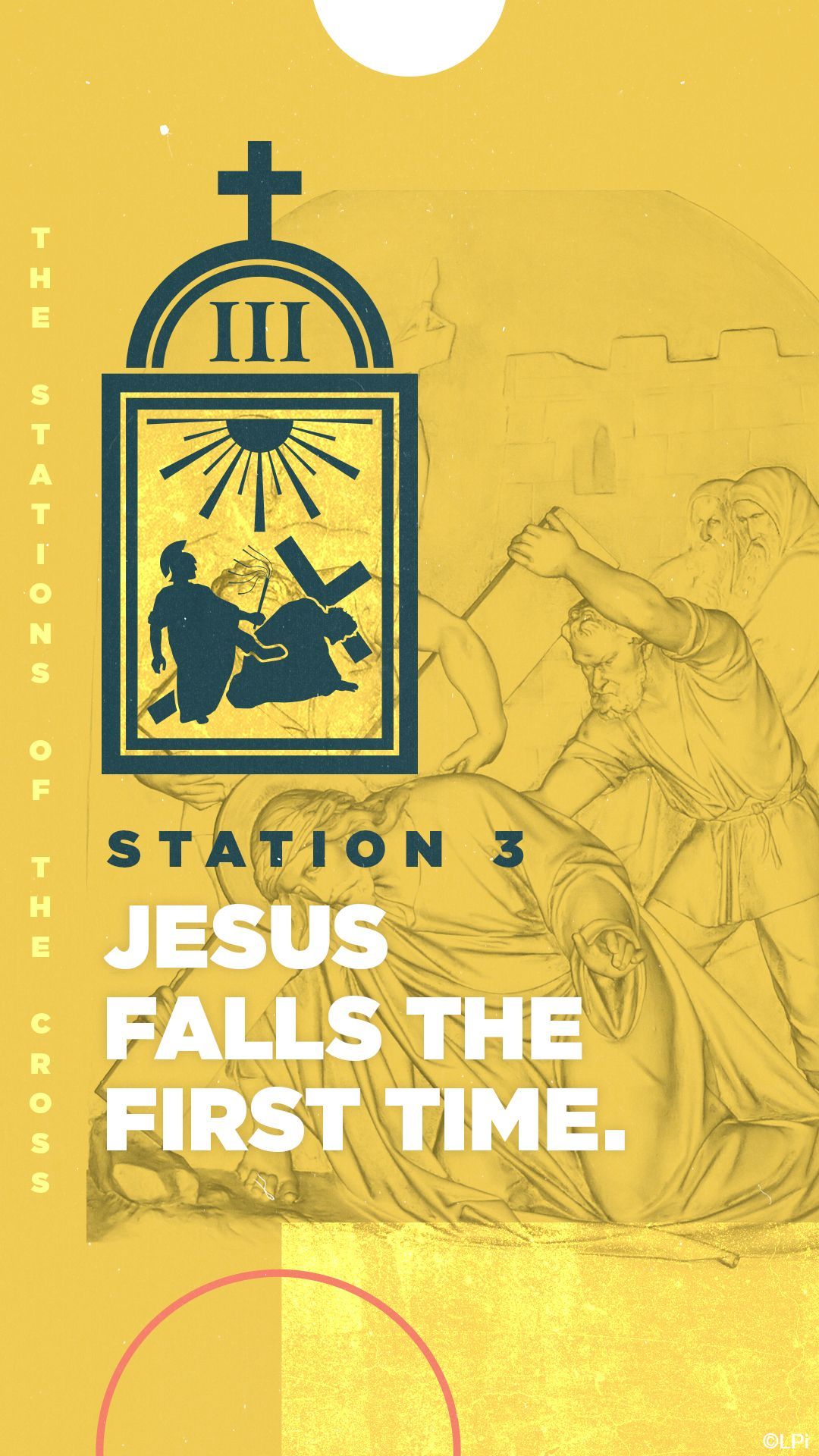
THIRD STATION
JESUS FALLS THE FIRST TIME
V. We adore you, O Christ, and we bless you.
R. Because, by your holy cross, you have redeemed the world.
The heavy cross cuts and tears into our Lord's shoulders.
The crowd has swollen into a multitude, and the legionaries can scarcely contain the angry, surging mob which, like a river that has burst its banks, flows through the streets and alleyways of Jerusalem.
The worn-out body of Jesus staggers now beneath the huge cross. His most loving heart can barely summon up another breath of life for his poor wounded limbs.
To his right and left, our Lord sees the multitude moving around like sheep without a shepherd. He could call them one by one by their names-by our names. There they are, those who were fed at the multiplication of the loaves and fishes, those who were cured of their ailments, those he taught by the lakeside, on the mountain and in the porticoes of the Temple.
A sharp pain pierces the soul of Jesus; our Lord falls to the ground, exhausted.
* You and I can say nothing: now we know why the cross of Jesus weighs so much. We weep over our wretched failings and also for the terrible ingratitude of the human heart. From the depths of our soul there comes an act of real contrition, which lifts us up from the prostration of sin. Jesus has fallen that we might get up: once and for all.
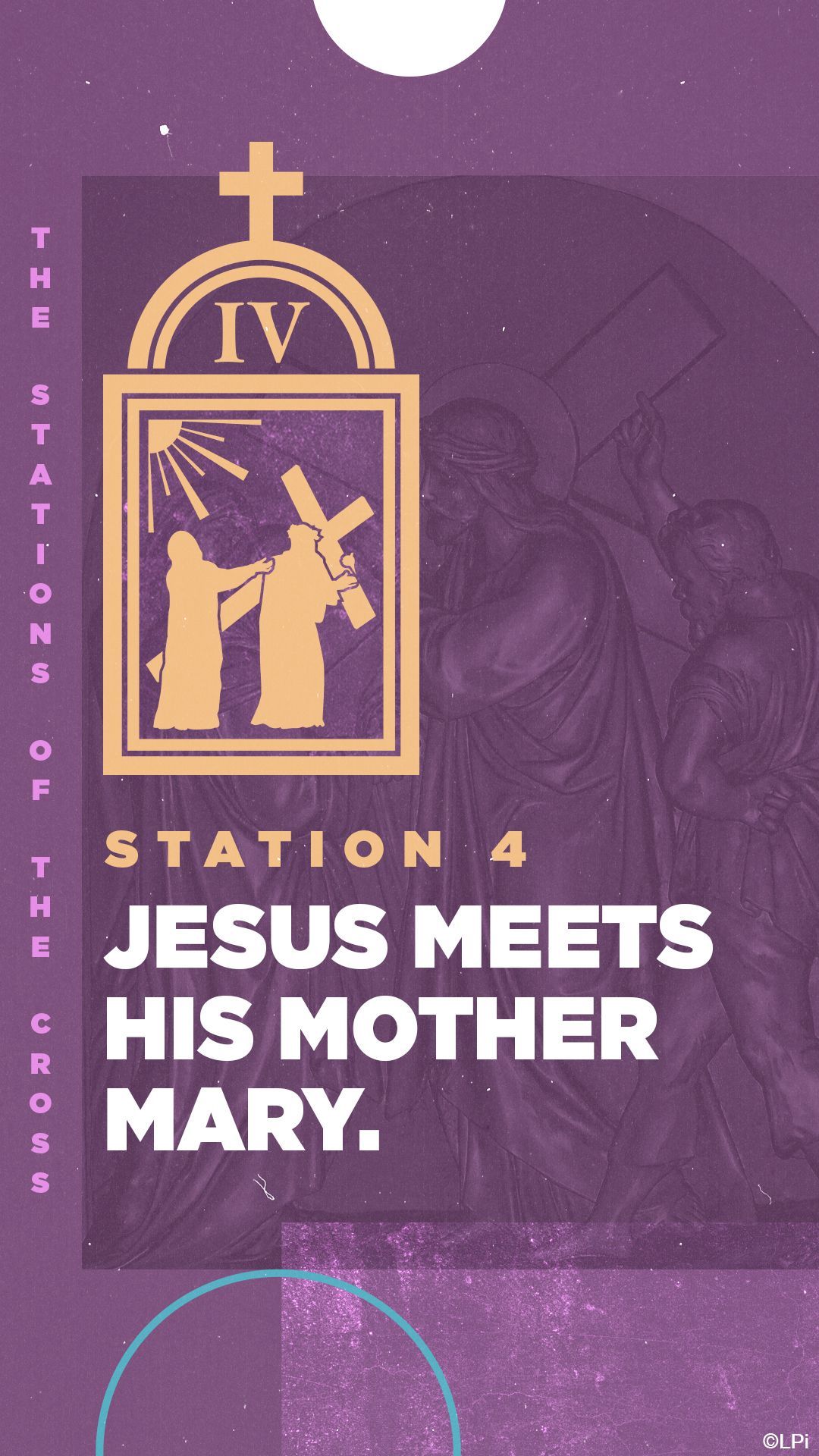
FOURTH STATION
JESUS MEETS HIS BLESSED MOTHER
V. We adore you, O Christ, and we bless you.
R. Because, by your holy cross, you have redeemed the world.
No sooner has Jesus risen from his first fall than he meets his Blessed Mother, standing by the wayside where he is passing.
With immense love Mary looks at Jesus, and Jesus at his mother. Their eyes meet, and each heart pours into the other its own deep sorrow. Mary's soul is steeped in bitter grief, the grief of Jesus Christ.
O all you that pass by the way, look and see, was there ever a sorrow to compare with my sorrow! (Lm 1:12).
But no one notices, no one pays attention; only Jesus.
Simeon's prophecy has been fulfilled: Thine own soul a sword shall pierce (Lk 2:35).
In the dark loneliness of the Passion, our Lady offers her son a comforting balm of tenderness, of union, of faithfulness; a "yes" to the divine will.
* Hand in hand with Mary, you and I also want to console Jesus, by accepting always and in everything the will of his Father, of our Father.
Only thus will we taste the sweetness of Christ's cross and come to embrace it with all the strength of Love, carrying it in triumph along the ways of the earth.
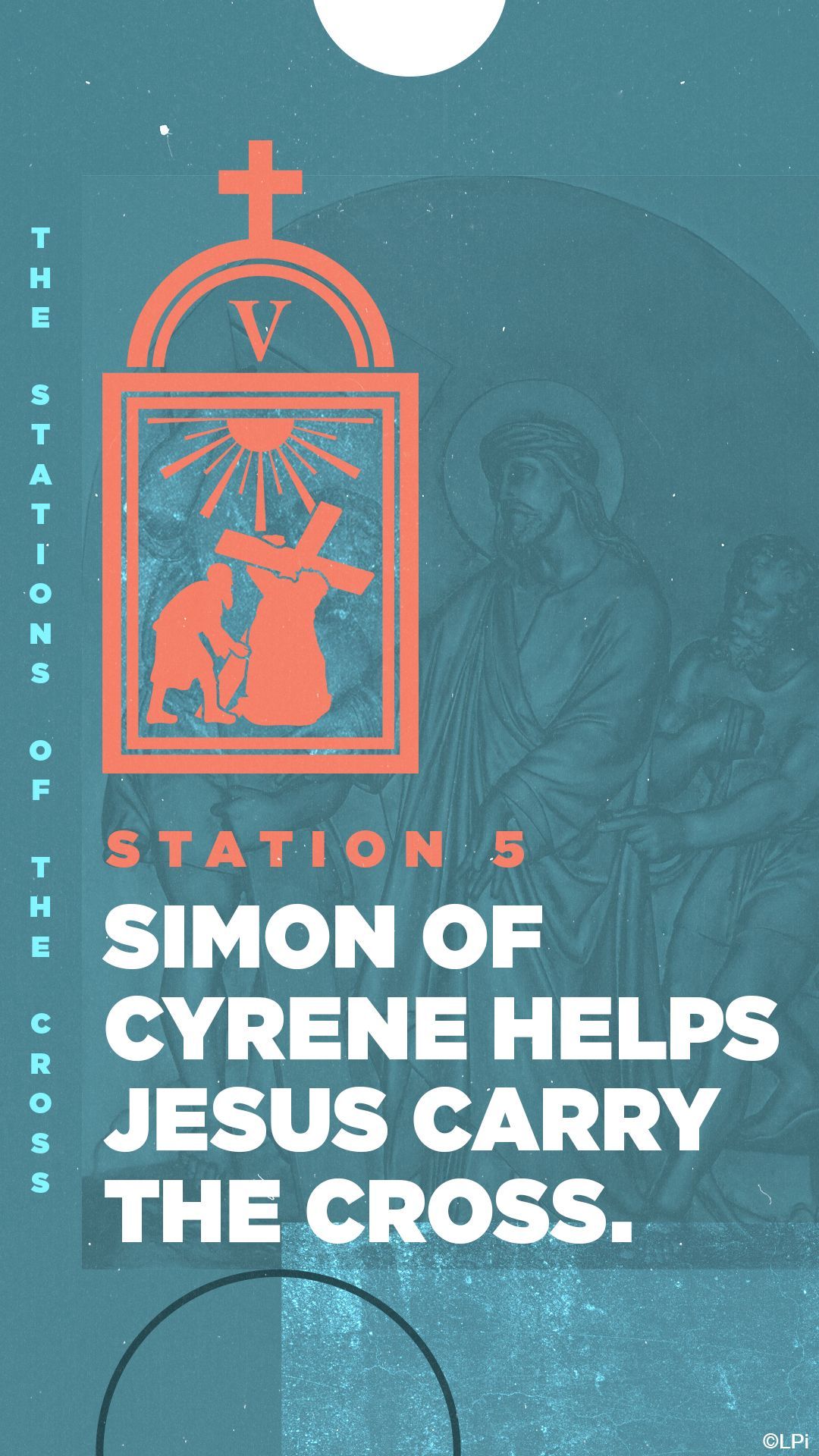
FIFTH STATION
SIMON OF CYRENE HELPS JESUS TO CARRY THE CROSS
V. We adore you, O Christ, and we bless you.
R. Because, by your holy cross, you have redeemed the world.
Jesus is exhausted. His footsteps become more and more unsteady, and the soldiers are in a hurry to be finished. So when they are going out of the city through the Judgment Gate, they take hold of a man who is coming in from a farm, a man called Simon of Cyrene, the father of Alexander and Rufus, and they force him to carry the cross of Jesus (cf. Mk 15:21).
In the whole context of the Passion, this help does not add up to very much. But, for Jesus, a smile, a word, a gesture or a little bit of love is enough for him to pour out his grace bountifully on the soul of his friend. Years later, Simon's sons, Christians by then, will be known and held in high esteem among their brothers in the faith. And it all started with this unexpected meeting with the cross.
I went to those who were not looking for me; I was found by those that sought me not (Is 65:1).
* At times the cross appears without our looking for it: It is Christ who is seeking us out. And if by chance, before this unexpected cross which, perhaps, is therefore more difficult to understand, your heart were to show repugnance . . . don't give it consolations. And, filled with a noble compassion, when it asks for them, say to it slowly, as one speaking in confidence: "Heart: heart on the cross! Heart on the cross!"
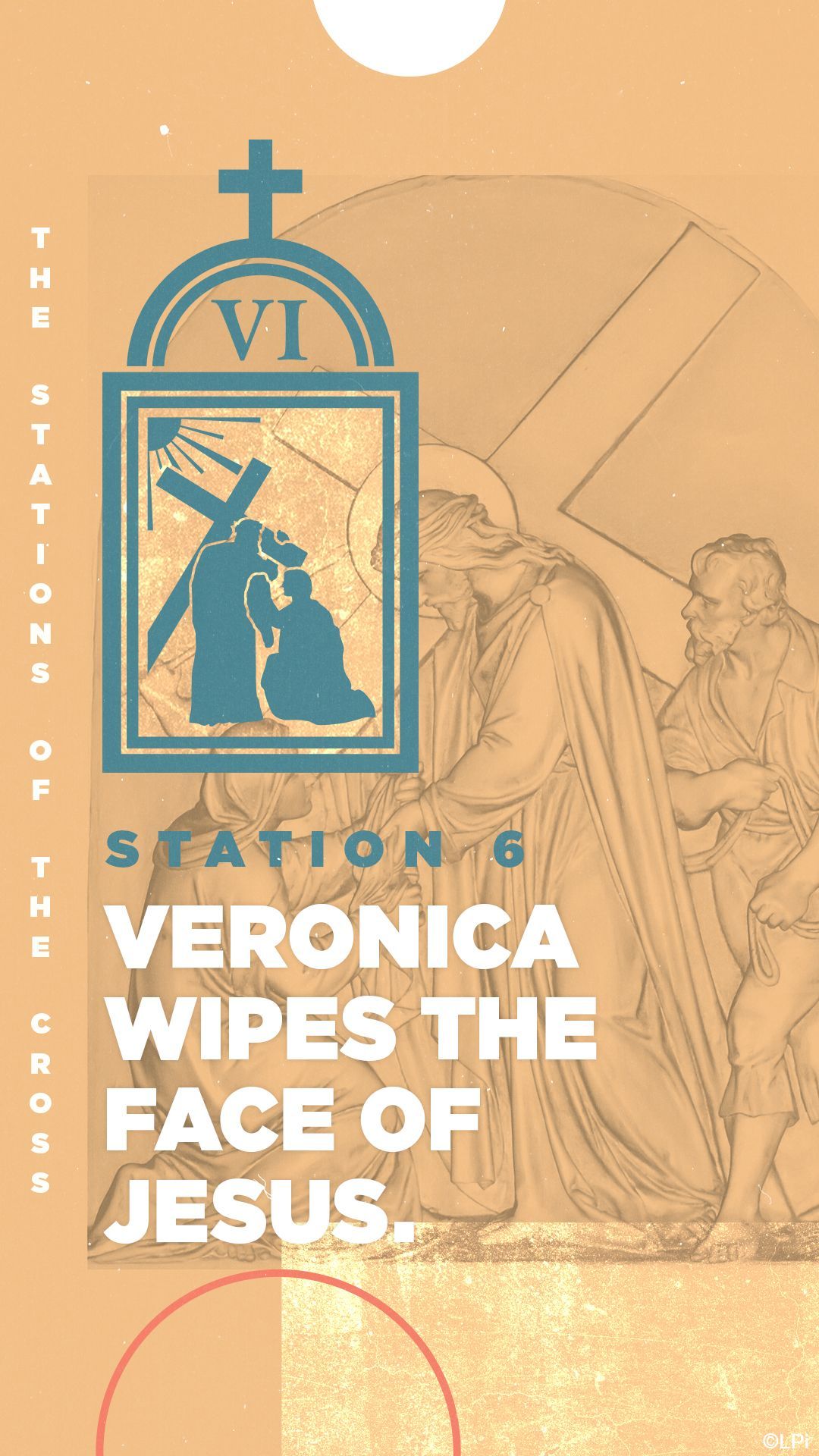
SIXTH STATION
VERONICA WIPES THE FACE OF JESUS
V. We adore you, O Christ, and we bless you.
R. Because, by your holy cross, you have redeemed the world.
Jesus, suddenly a woman comes out of the crowd. Her name is Veronica. You can see how she cares for you as she takes a cloth and begins to wipe the blood and sweat from your face. She can't do much, but she offers what little help she can.
As a child, sometimes I know someone could use a little help and understanding. They may be picked on or teased by others, or just sad or lonely. Sometimes I feel bad that others don't step in to help, but I don't help either.
As an adult, I notice the needs around me. Sometimes my own family members crave my attention, and I don't even seem to notice. Sometimes a co-worker, friend, or family member could use help or understanding, but I don't reach out to help lest I be criticized, or that they demand more of me than I'd like to give.
My tender Jesus, Who didst deign to print Thy sacred face upon the cloth with which Veronica wiped the sweat from off Thy brow, print in my soul deep, I pray Thee, the lasting memory of Thy bitter pains.
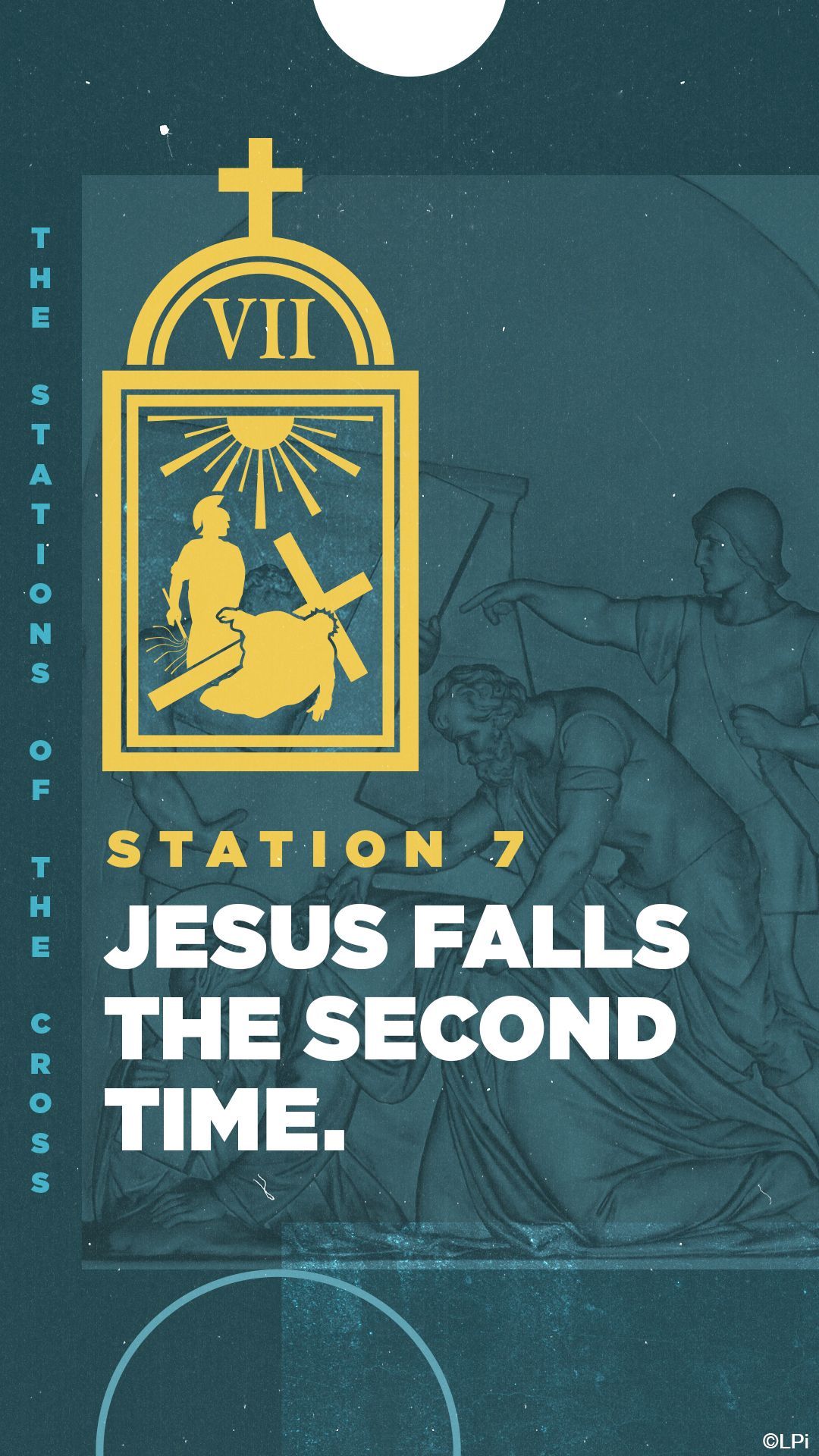
SEVENTH STATION
JESUS FALLS A SECOND TIME
V. We adore you, O Christ, and we bless you.
R. Because, by your holy cross, you have redeemed the world.
Outside the walls of the city, the body of Jesus again gives way through weakness, and he falls a second time, amid the shouts of the crowd and the rough handling of the soldiers.
Infirmity of body and bitterness of soul have caused Jesus to fall again. All the sins of men-mine too-weigh down on his Sacred Humanity.
He has borne our infirmities and carried our sorrows, and we have taken him for a leper, and as one struck by God and afflicted. But he was wounded for our iniquities and bruised for our sins. On him fell the punishment that brought us salvation, and by his wounds we have been healed (Is 53:4-5).
Jesus stumbles, but his fall lifts us up; his death brings us back to life.
To our falling again and again into evil, Jesus responds with his determination to redeem us, with an abundance of forgiveness. And, so that no one may despair, again he wearily raises himself, embracing the cross.
* May our stumbles and defeats separate us from him no more. Just as a feeble child throws himself contritely into the strong arms of his father, you and I will hold tightly to the yoke of Jesus. Only a contrition and humility like this can transform our human weakness into the fortitude of God.
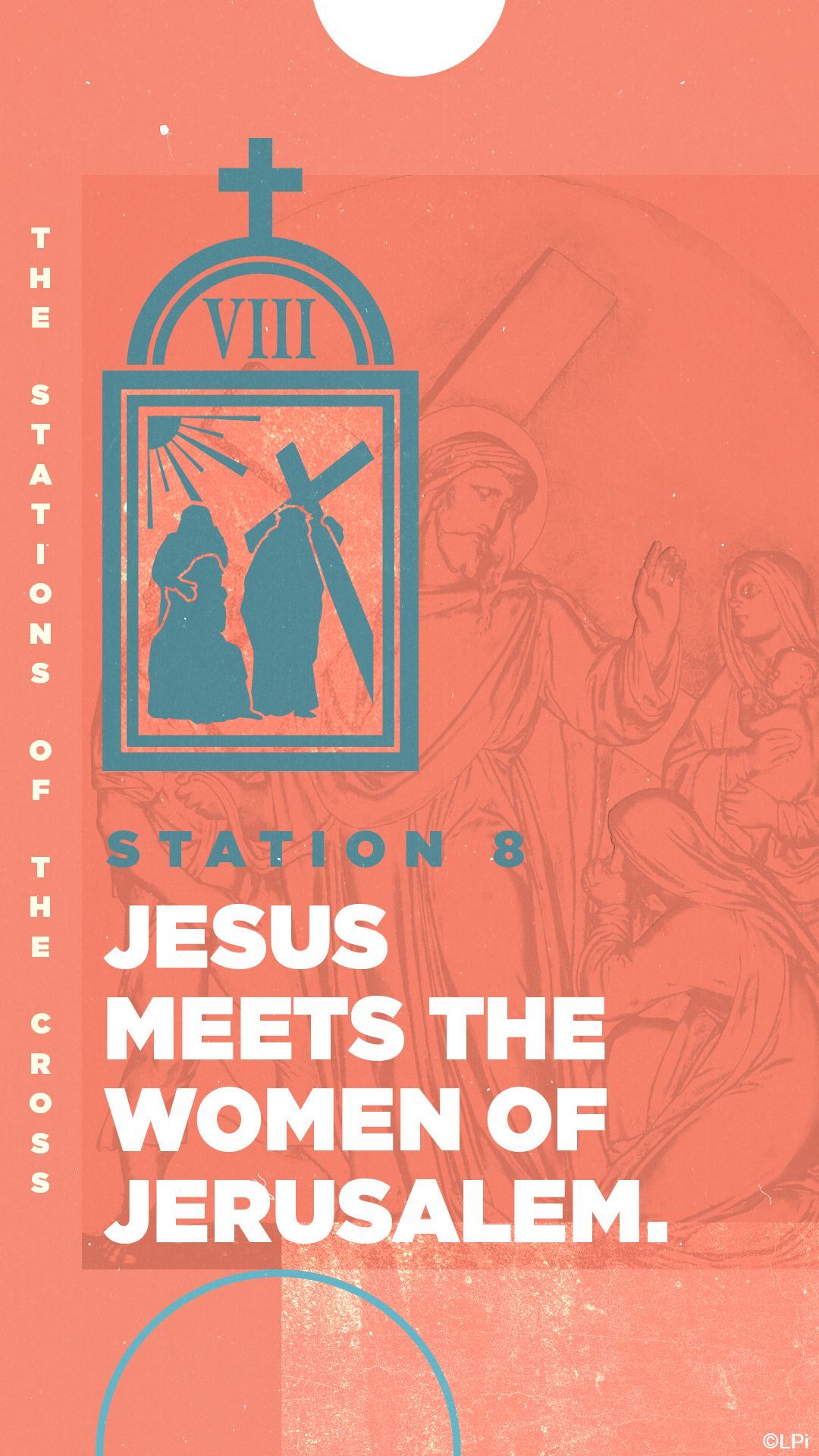
EIGHTH STATION
JESUS CONSOLES THE WOMEN OF JERUSALEM
V. We adore you, O Christ, and we bless you.
R. Because, by your holy cross, you have redeemed the world.
Among the people watching our Lord as he passes by are a number of women who, unable to restrain their compassion, break into tears, perhaps recalling those glorious days spent with Jesus, when everyone exclaimed in amazement: Bene omnia fecit (Mk 7:37). He has done all things well.
But our Lord wishes to channel their weeping towards a more supernatural motive. He invites them to weep for sins, which are the cause of the Passion and which will draw down the rigor of divine justice:
Daughters of Jerusalem, weep not for me, but for yourselves and for your children. . . . For if they do these things to the green wood, what shall be done to the dry? (Lk 23:28, 31).
* Your sins, my sins, the sins of all men, rise up. All the evil we have done and the good that we have neglected to do. The desolate panorama of the countless crimes and iniquities which we would have committed, if he, Jesus, had not strengthened us with the light of his most loving glance.
How little a life is for making atonement!
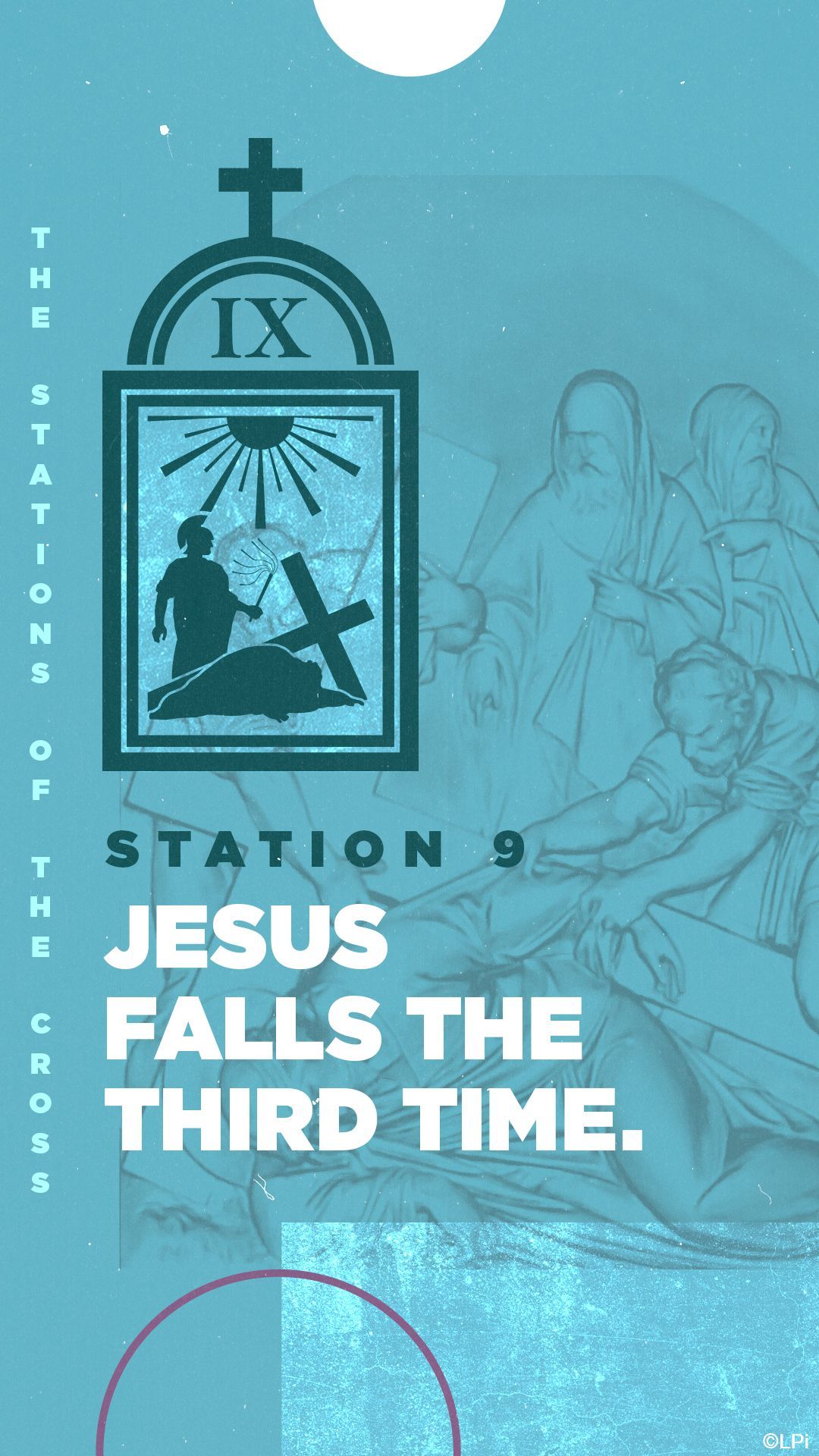
NINTH STATION
JESUS FALLS THE THIRD TIME
V. We adore you, O Christ, and we bless you.
R. Because, by your holy cross, you have redeemed the world.
Our Lord falls for the third time, on the slope leading up to Calvary, with only forty or fifty paces between him and the summit. Jesus can no longer stay on his feet: his strength has failed him, and he lies on the ground in utter exhaustion.
He offered himself up because it was his will; abused and ill-treated, he opened not his mouth, as a sheep led to the slaughter, dumb as a lamb before its shearers (Is 53:7).
Everyone against him . . . the people of the city and those from abroad, and the Pharisees and the soldiers and the chief priests. . . . All of them executioners. His mother-my mother-weeps.
Jesus fulfills the will of his Father! Poor; naked. Generous: what is there left for him to surrender? Dilexit me, et tradidit semetipsum pro me (Gal 2:20), he loved me and delivered himself up unto death for me.
* My God! May I hate sin and unite myself to you, taking the holy cross into my arms, so that I, in my turn, may fulfill your most lovable will, . . . stripped of every earthly attachment, with no other goal but your glory, . . . generously, not keeping anything back, offering myself with you in a perfect holocaust.
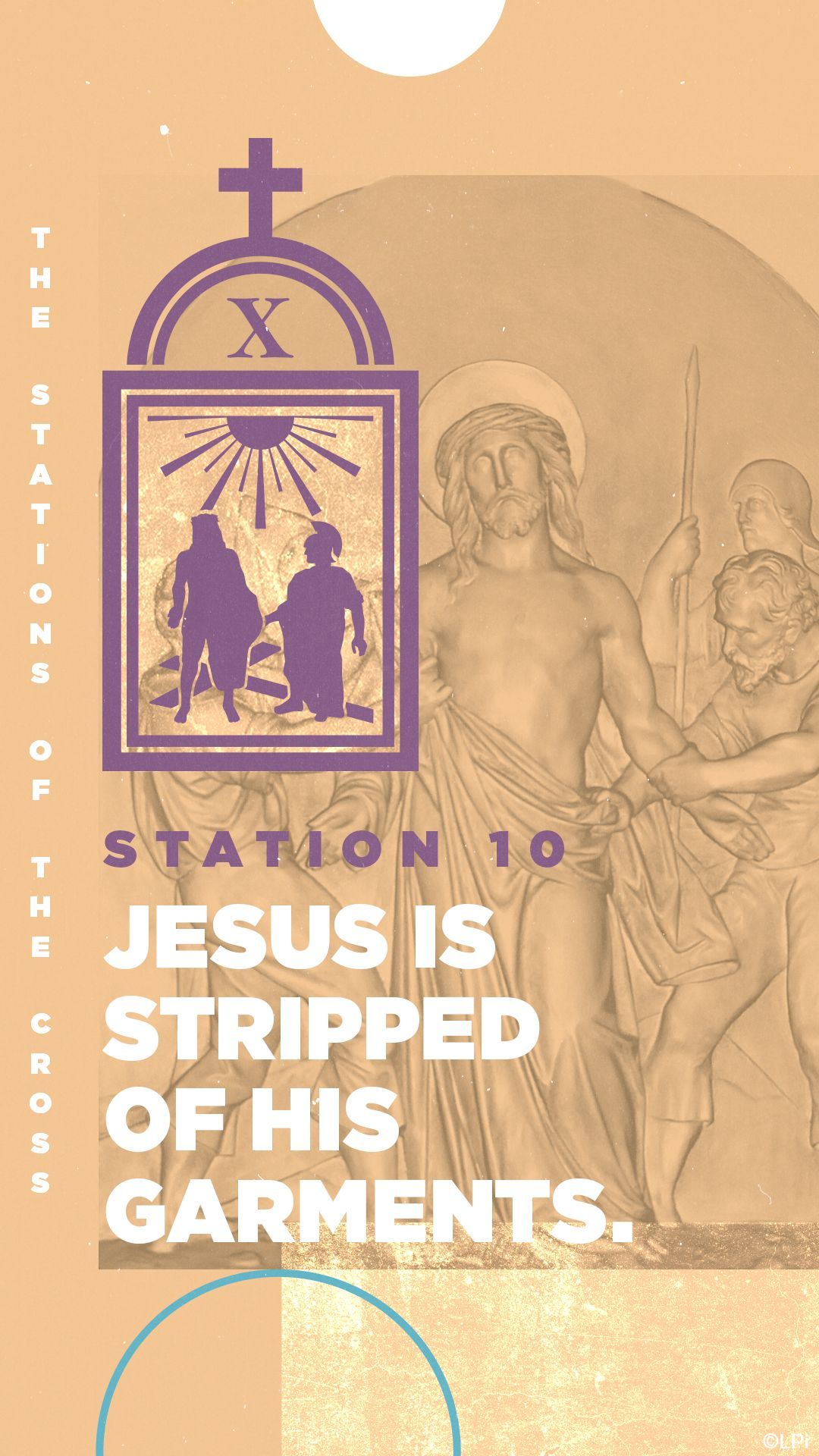
TENTH STATION
JESUS IS STRIPPED OF HIS GARMENTS
V. We adore you, O Christ, and we bless you.
R. Because, by your holy cross, you have redeemed the world.
When our Lord arrives at Calvary, he is given some wine to drink mixed with gall, as a narcotic to lessen in some way the pain of the crucifixion. But Jesus, after tasting it to show his gratitude for that kind service, he has not wanted to drink (cf. Mt 27:34). He gives himself up to death with the full freedom of love.
Then the soldiers strip Christ of his garments.
From the soles of his feet to the top of his head, there is nothing healthy in him: wounds and bruises and swelling sores. They are not bound up, nor dressed, nor anointed with oil (Is 1:6).
The executioners take his garments and divide them into four parts. But the cloak is without seam, so they say:
It would be better not to tear it, but let us cast lots for it to see whose it shall be (Jn 19:24).
Thus, Scripture is again fulfilled: They divided my garments among them, and upon my vesture they cast lots (Ps 21:19).
* Despoiled, stripped, left in the most absolute poverty, our Lord is left with nothing, save the wood of the cross.
For us to reach God, Christ is the way; but Christ is on the cross, and to climb up to the cross we must have our heart free, not tied to earthly things.
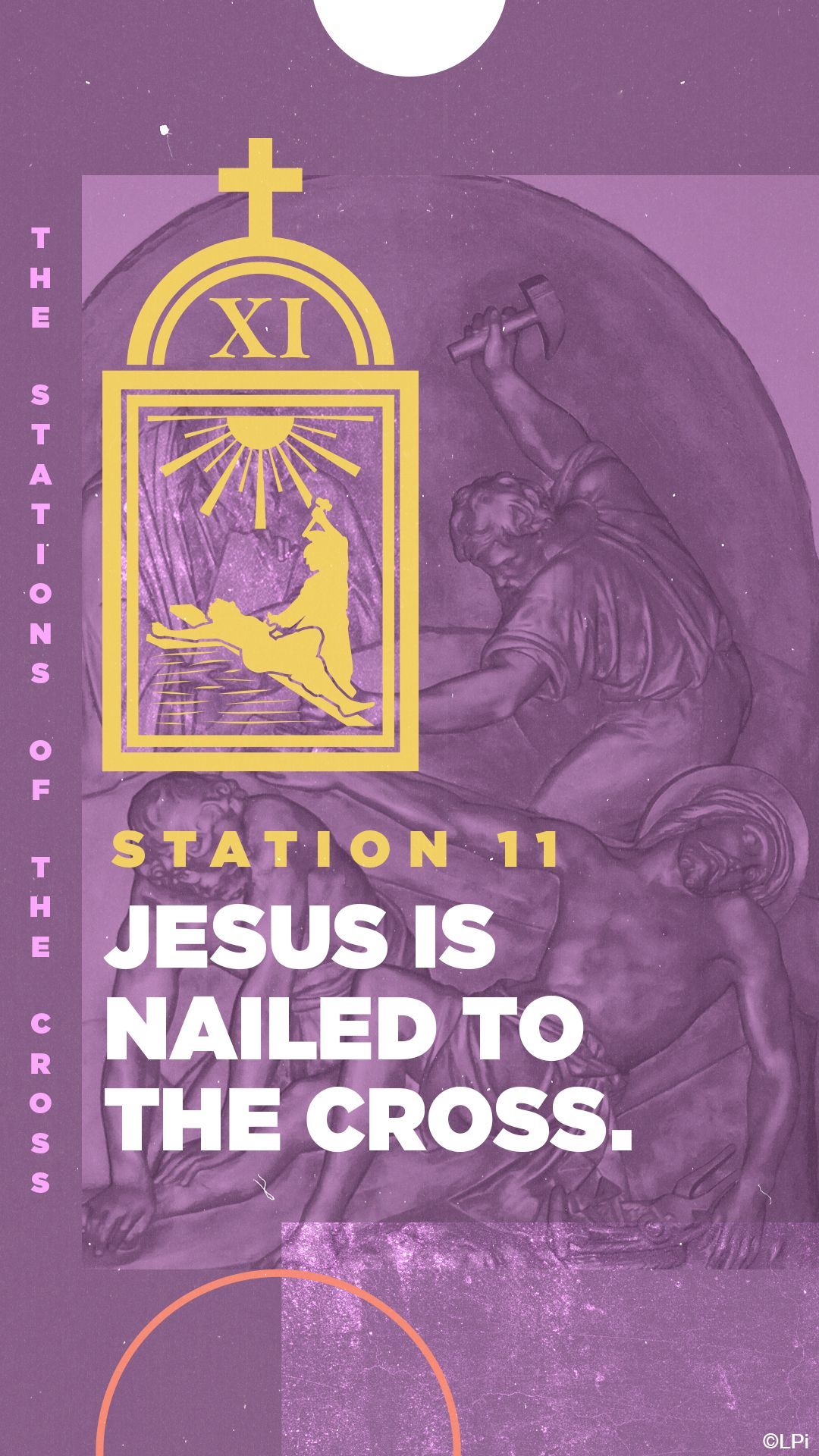
ELEVENTH STATION
JESUS IS NAILED TO THE CROSS
V. We adore you, O Christ, and we bless you.
R. Because, by your holy cross, you have redeemed the world.
You are stretched out on the cross you have carried so far. The soldiers take big nails and drive them into your hands and feet. You feel abandoned by the people you loved so much. People seem to have gone mad. You have done nothing but good, yet they drive nails through your hands and feet.
As a child, sometimes I hurt others. Sometimes I join with friends and decide not to like another. We gang up against another and cause them hurt and pain. Sometimes I say or do hurtful things to my brothers and sisters. I can wonder what they'd think about themselves if they believed everything I told them about themselves.
As and adult, sometimes I discriminate against others. Even without thinking, I judge others because of their color, intelligence, income level or name. I forget that I am to live as a brother or sister to all people. Sometimes I use harsh words when I speak to my children and family members. I can find it easy to look for something that isn't very important and make it very important.
Help me look again at the people around me. Help me see the hurt and pain I have caused in others. Be with me to help me make amends for the harm I have done.
My Jesus, by Thine agony when the cruel nails pierced Thy tender hands and feet and fixed them to the cross, make me crucify my flesh by Christian penance.
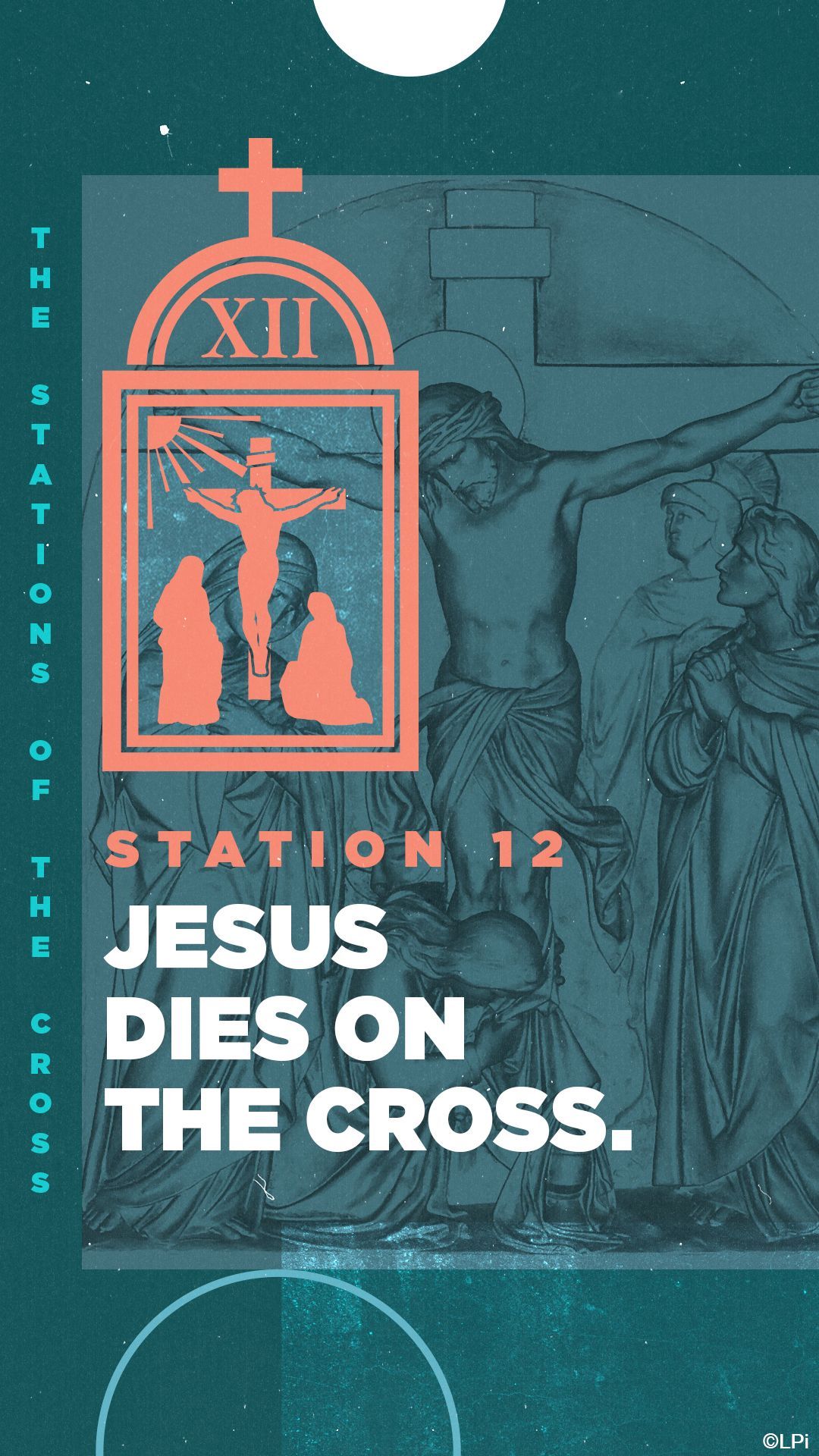
TWELFTH STATION
JESUS DIES ON THE CROSS
V. We adore you, O Christ, and we bless you.
R. Because, by your holy cross, you have redeemed the world.
On the uppermost part of the cross, the reason for the sentence is written: Jesus of Nazareth, King of the Jews (Jn 19:19). And all who pass by insult him and jeer at him. If he is the king of Israel, let him come down here and now from the cross (Mt 27:42).
One of the thieves comes to his defense: This man has done no evil . . . (Lk 23:41). Then, turning to Jesus, he makes a humble request, full of faith: Lord, remember me when thou comest into thy kingdom (Lk 23:42).
Truly, I say to thee: This day thou shalt be with me in Paradise (Lk 23:43).
At the foot of the cross stands his mother, Mary, with other holy women. Jesus looks at her; then he looks at the disciple whom he loves, and he says to his mother: Woman, behold thy son. Then he says to the disciple: Behold thy mother (Jn 19:26-27).
The sun's light is extinguished, and the earth is left in darkness. It is close to three o'clock, when Jesus cries out: Eli, Eli, lamma sabacthani? That is: My God, my God, why hast thou forsaken me? (Mt 27:46).
Then, knowing that all things are about to be accomplished, that the scriptures may be fulfilled, he says: I am thirsty (Jn 19:28).
The soldiers soak a sponge in vinegar and, placing it on a reed of hyssop, put it to his mouth. Jesus sips the vinegar, and exclaims: It is accomplished!
The veil of the temple is rent, and the earth trembles, when the Lord cries out in a loud voice: Father, into thy hands I commend my spirit. And he expires.
* Love sacrifice; it is a fountain of interior life. Love the cross, which is an altar of sacrifice. Love pain, until you drink, as Christ did, the very dregs of the chalice.
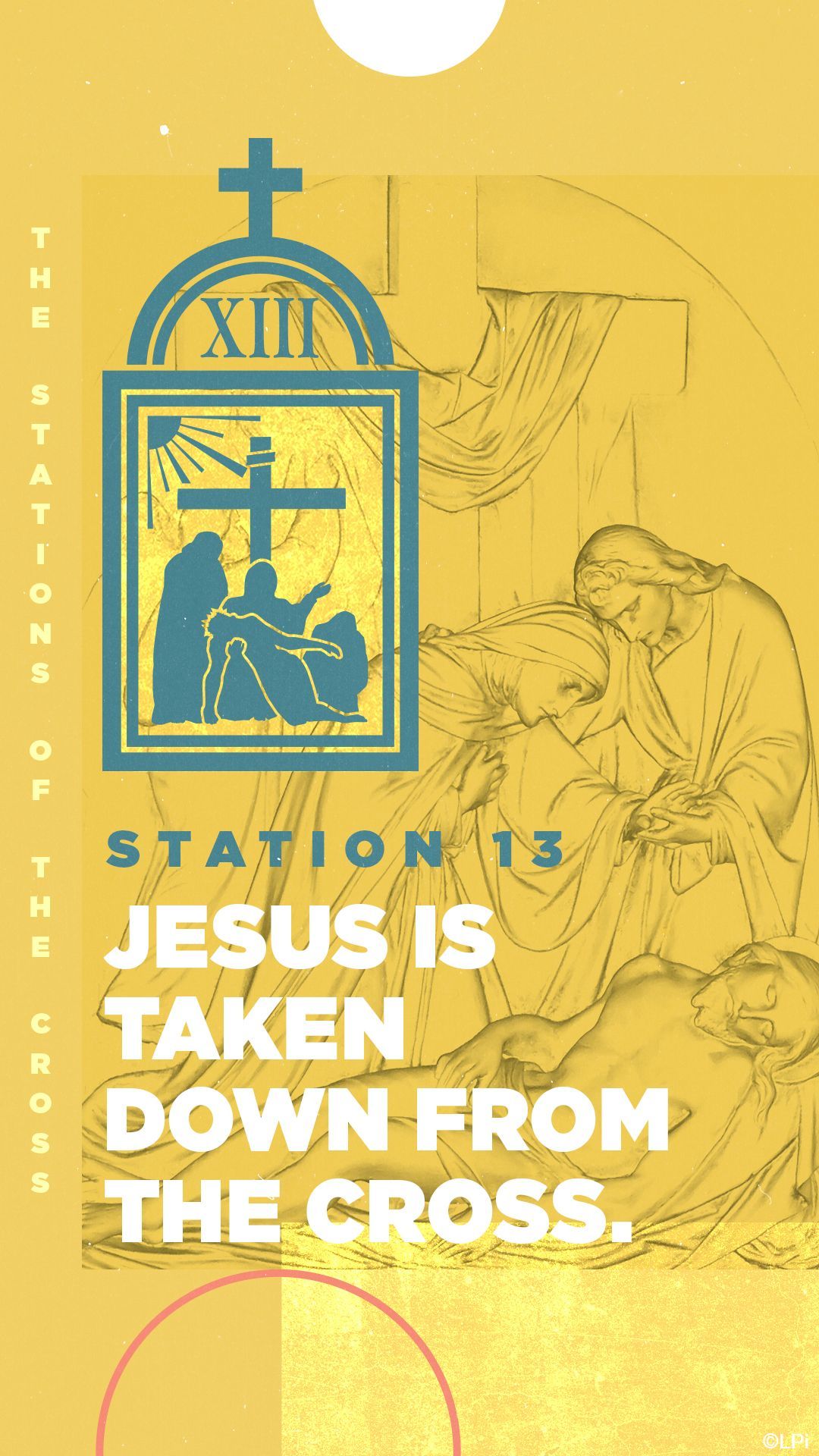
THIRTEENTH STATION
JESUS IS TAKEN DOWN FROM THE CROSS
V. We adore you, O Christ, and we bless you.
R. Because, by your holy cross, you have redeemed the world.
Jesus, how brutally you were put to death. How gently your are taken from the cross. Your suffering and pain are ended, and you are put in the lap of your mother. The dirt and blood are wiped away. You are treated with love.
As a child, sometimes I treat others better when they're sad or in pain. When somebody dies, I become very gentle and kind. I notice the good and kind things people say about those who have died.
As an adult, I seem to be kinder when someone dies. If only I could learn to see the good things about them while they were alive. If only I would tell those around me how much I love them, while I still have the opportunity to do so.
Help me look for the good in those around me, especially those I love the most. Help me live this day as if it were the last. Help me become a more gentle and loving person through my greater appreciation for those around me.
O Mary, Mother most sorrowful, the sword of grief pierced thy soul when thou didst see Jesus lying lifeless on thy bosom; obtain for me hatred of sin because sin slew thy Son and wounded thine own heart, and grace to live a Christian life and save my soul.
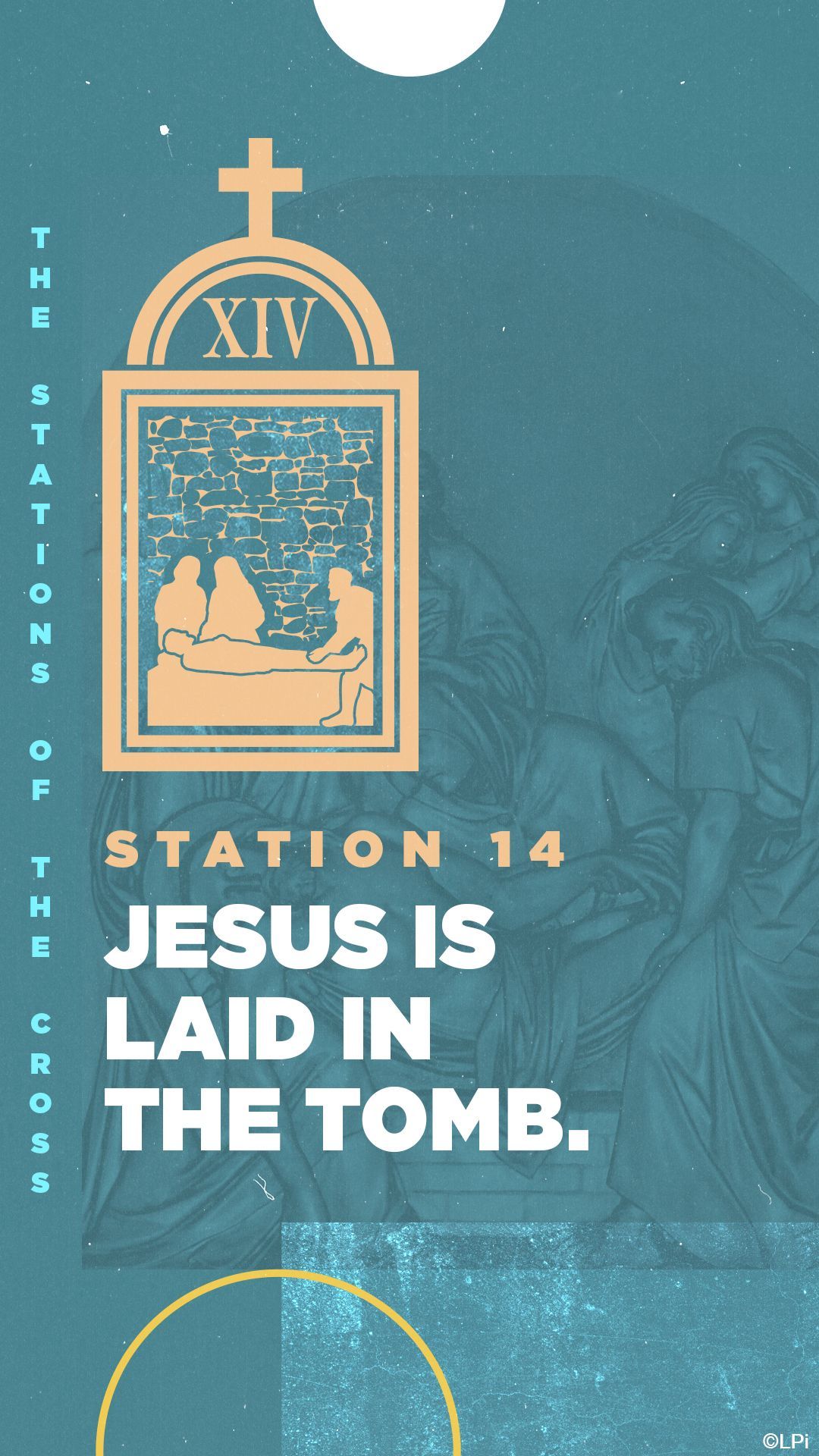
FOURTEENTH STATION
JESUS IS LAID IN THE TOMB
V. We adore you, O Christ, and we bless you.
R. Because, by your holy cross, you have redeemed the world.
Jesus, your body is prepared for burial. Joseph gave you his own tomb. He laid your body there and rolled a large stone in front of it, then went home. What a sad day it has been for so many people.
As a child, sometimes I try to keep everything for myself. I find it hard to share my things with my brothers or sisters and with my friends.
As an adult, I can be selfish too. I can accumulate things and keep them for myself. I try to make sure I have what I want before I share what I have with anybody else.
Help me think of Joseph of Arimathea, who risked his own life as he accepted Jesus' body for burial. Help me think of how Joseph loved Jesus so much that he gave him his own tomb.
My Jesus, beside Thy body in the tomb I, too, would lie dead; but if I live, let it be for Thee, so as one day to enjoy with Thee in heaven the fruits of Thy passion and Thy bitter death.